Biodiversity
Challenges, Risks,
and Impacts
Nowadays, the world is experiencing a significant loss of biodiversity. Massive Climate Changes and human activities have continuously accelerated the decline in the quantity and variety of plants and animals
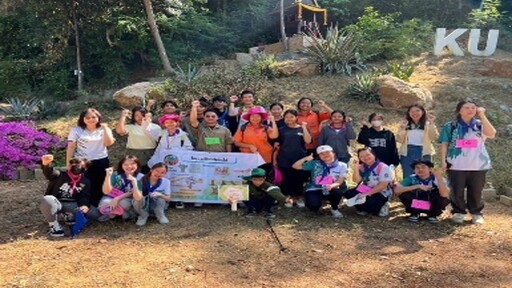
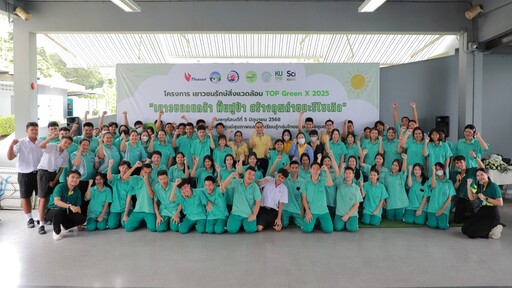
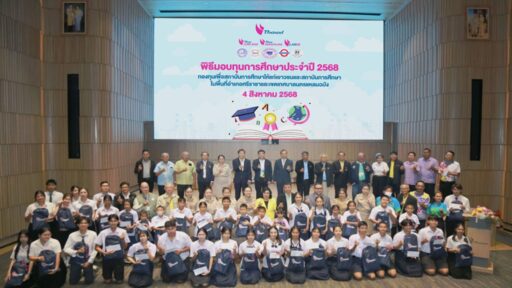
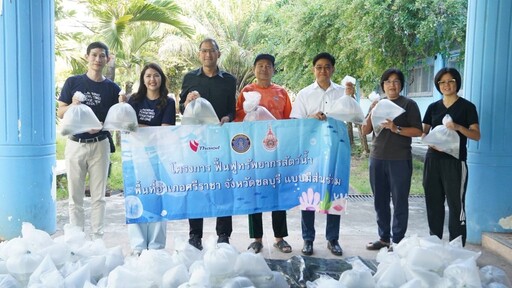
Impacting High-Biodiversity Wilderness Areas. These situations pose significant challenges to Thaioil Group, as the Company must operate the business in line with biodiversity agreements and prevent biodiversity loss on land, in water, and through deforestation. Recognized the significant impacts on biodiversity and impact on the business operation of Thaioil Group, the Company has not only established has not only determined strong commitments and targets on biodiversity but has also conducted a biodiversity risk assessment, developed an action plan, and implementation to achieve the target. Moreover, Thaioil Group strives to create partnership networks with several sectors, including the educational institutions, communities, and government agencies, to collaboratively prevent and restore biodiversity in both terrestrial and aquatic ecosystems.

Commitment
Thaioil Group is committed to conduct business with responsibility for society, environment, biodiversity, and ecosystem preservation. The Company has integrated the environmental impact assessment on biodiversity and forest areas into the business operations.
The commitment is to avoid and reduce potential risks while supporting sustainable development in all dimensions: economic, environmental, and social dimensions. The Company has committed to No Net Deforestation by implementing reforestation and tree planting to compensate for any loss of forest from the business activities. Furthermore, this commitment ensures that the Company has controlled and minimized environmental impacts and drives the business towards No Net Loss (NNL) of terrestrial and aquatic biodiversity. Thaioil Group recognizes the invaluable nature of biodiversity as a shared resource and strives to contribute to its preservation for the benefit of all.
In 2023, Thaioil Group elevated the policy commitment in “Thaioil and Subsidiaries’ Quality, Security, Safety, Occupational Health, Environment, and Energy Management Policy” and “Thaioil and Subsidiaries’ Biodiversity Statement” through the approval of the Board of Directors to consistently drive the most efficient environmental management practices.
Thaioil and Subsidiaries’ Quality, Security, Safety, Occupational Health, Environment, And Energy Management Policy


Management Approach
and Performance
Thaioil Group has applied the Biodiversity and Ecosystem Service Manual that had been reviewed together with PTT Group Biodiversity and Ecosystem Service.
This manual was developed from the integration of various national and international standards such as the Thailand’s Master Plan for Integrated Biodiversity Management, the GRI Standard, IPIECA, and others. The Company uses this manual to perform a biodiversity risk assessment within business operations. In addition, the Company commits to No Net Deforestation by implementing reforestation and tree planting to compensate for any forest loss from our business activities and drives the business towards No Net Loss (NNL) of terrestrial and aquatic biodiversity.
Biodiversity Risk
and Impact Assessment
- Business Risks: Biodiversity loss driven by climate change, pollution, and seasonal fluctuations could lead to a scarcity of natural resources essential for Thaioil Group’s operations.
- Regulatory Risks: The increasing stringency of environmental regulations, directly or indirectly linked to biodiversity, could raise business costs and complexities in operations.
- Reputational Risks: Failure to manage biodiversity effectively may harm Thaioil Group’s corporate image and erode stakeholder trust, particularly among customers, vendors, shareholders, investors and business partners who value biodiversity management.
- Environmental and Community Risks: Biodiversity loss could negatively affect community livelihoods and potentially create long-term impacts on Thaioil Group’s operations.
Therefore, Thaioil Group has applied several biodiversity risk assessment tools, including Integrated Biodiversity Assessment Tool (IBAT), ENCORE and WWF Biodiversity Risk Filter, and IUCN Red List. In addition, the Company has implemented the GRI Reporting Protocols to establish methodologies and guidelines for assessing risks related to biodiversity and ecosystem services.
Thaioil and Subsidiarity Biodiversity Management

Thaioil and Subsidiarity Biodiversity Management
Dependency-related Biodiversity Risks considered in Risk Assessment
Thaioil Group conducted risk assessment through the ENCORE tool for assessing the dependency on natural services. This tool ranks the level of dependency on natural services by industry type, such as oil refinery, power plants, and petrochemical. The assessment results indicate that Thaioil Group has a moderate level of dependency in the following issues:
- Water Scarcity
- Extreme Heat
- Land, Freshwater and Sea Use Change
- Tree Cover Loss
- Pollution
Nevertheless, in 2025, the result of the biodiversity risk assessment indicated the risk at low level, because Thaioil Group’s business operational areas are located outside the High-Biodiversity Wilderness Areas with distance between the Company’s operational areas and High-Biodiversity Wilderness Areas exceeds 10 kilometers. The result of the biodiversity assessment of Thaioil Group is illustrated in the table below:
Number of Operational Sites | Area of Operational Sites | ||
|---|---|---|---|
Rai | Hectare | ||
Total operational site | 1 | 605 | 245 |
Total operational site that are assessed | 1 | 605 | 245 |
Total operational sites that face the risk exposure | 0 | 0 | 0 |
Management Plan | 0 | 0 | 0 |
พื้นที่ปฏิบิติการทั้งหมด
จำนวนพื้นที่ปฏิบัติงาน
1
จำนวน
พื้นที่ปฏิบัติงาน
23,610.25
ไร่
พื้นที่ปฏิบิติการที่ได้รับการประเมินทั้งหมด
จำนวนพื้นที่ปฏิบัติงาน
1
จำนวน
พื้นที่ปฏิบัติงาน
23,610.25
ไร่
พื้นปฏิบิติการที่เผชิญความเสี่ยง
จำนวนพื้นที่ปฏิบัติงาน
0
จำนวน
พื้นที่ปฏิบัติงาน
0
ไร่
แผนการบริหารจัดการ
จำนวนพื้นที่ปฏิบัติงาน
0
จำนวน
พื้นที่ปฏิบัติงาน
0
ไร่
Remark: Thaioil Group’s operational site covers Thaioil Public Company Limite (TOP), Thai Lube Base Public Company Limited (TLB), Thai Paraxylene Company Limited (TPX), LABIX Company Limited (LABIX), TOP SPP Company Limited (TOPSPP) in Si Racha and Sak Chaisidhi Complany Limited (SAKC) in Rayong.
Mitigation
Hierarchy
Thaioil Group has adopted the PTT Group Biodiversity and Ecosystem Service Manual and Assessment from Dow Jones Sustainability Indices (DJSI) to manage biodiversity and ecosystem services and conduct biodiversity risk assessments.
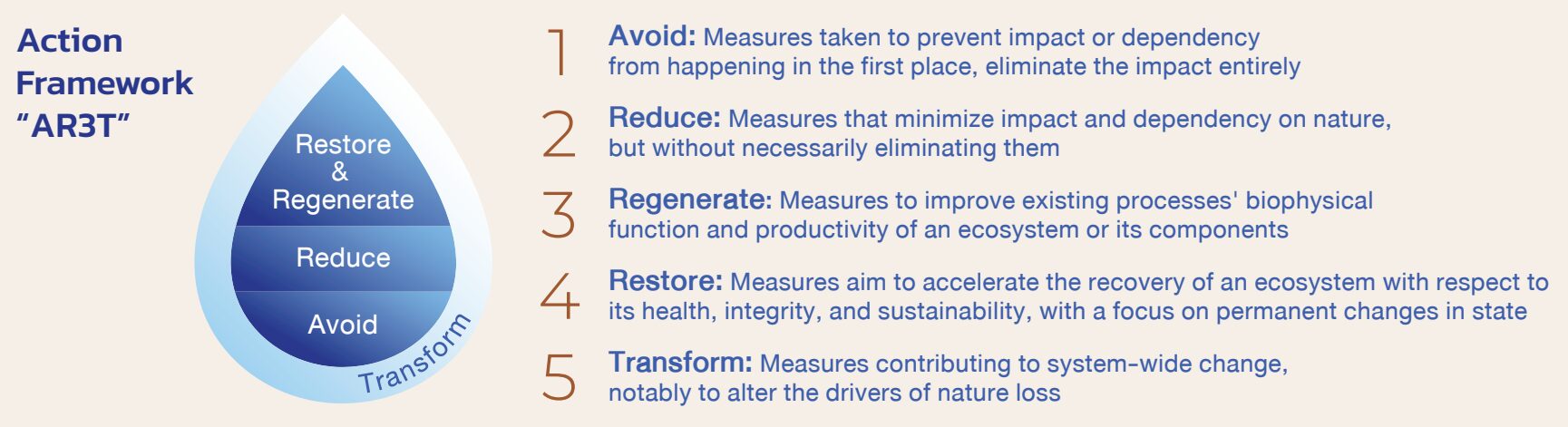
The Company also applies the Mitigation Hierarchy approach to avoid, reduce, restore and regenerate, and transform environmental impacts on biodiversity throughout the value chain and continuously monitor performance, with the following operational approach:
- Avoid: Avoid conducting business operations in critical biodiversity areas through Quality, Security, Safety, Occupational Health, Environment, and Energy policy, covering environmental impact assessment (EIA) and risk management. This extends measures to the supply chain to achieve No Net Loss (NNL), Net Positive Impact (NPI) and No Gross Deforestation (NGD).
- Reduce: Thaioil Group reduces impacts on biodiversity through the “TOP CE WE GO” project together with setting clear targets for reducing water usage and consumption. Additionally, the Company initiated several biodiversity impact reduction projects, such as the Green Product project (Green Product – Promotion of Green Procurement) and the Wastewater Treatment System Cover project (ETP Cover project) to reduce the emission of volatile organic compounds (VOCs) into the environment.
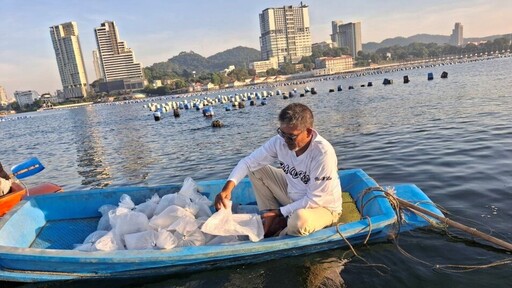
- Restore & Regeneration: Focusing on restoring ecosystems to their original state and conserving biodiversity through the improvement of existing projects, such as reforestation projects. Thaioil Group has conducted reforestation projects in various areas, including over 8,300 rai in Phrae Province and over 300 rai of mangrove forest projects in Trang Province. The Company continuously monitors and evaluates the performance.
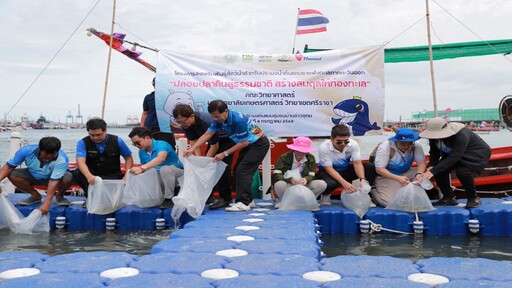
- Transform: Building cross-sector collaboration with the government, industry, and communities to restore ecosystems and promote biodiversity. As a member of the Thailand Mangrove Alliance, the Company signed an MOU (Memorandum of Understanding) with the Department of Marine and Coastal Resources aiming to expand and restore mangrove forests. Furthermore, the Company is expanding cooperation within companies both domestically and internally throughout the supply chain to develop sustainable products and create innovations that strengthen ecosystem resilience in the long term.
อีกทั้งยังได้ประยุกต์ใช้หลักการบรรเทาผลกระทบตามลำดับขั้น (Mitigation Hierarchy Principle) ในการป้องกัน หลีกเลี่ยง บรรเทา ฟื้นฟู และชดเชยผลกระทบทางสิ่งแวดล้อมต่อความหลากหลายทางชีวภาพตลอดห่วงโซ่คุณค่า
The Participation Network
on Biodiversity to mitigate impacts on ecosystem
External Organizations/ Agencies
The Institute of Marine Science of Burapha University, Bang Saen
Collaboration with Biodiversity Networks
Study the marine biodiversity at the port of Thai Oil Public Company Limited.
Cooperate on study project on the impact of crude oil spills on coral reef ecosystems and marine natural resources along the coasts of Si Chang Island and Khang Khao Island in Chonburi Province.
External Organizations/ Agencies
Office of Natural Resources and Environment, Chonburi Province
Naval Science Department
Department of Fisheries, Chonburi Province
Marine and Coastal Resources Office 2
Representatives from Environment and Pollution Control Office 13
Collaboration with Biodiversity Networks
Discuss and develop the monitoring and restoration plans with government agencies.
Determine the plan for monitoring and assessing environmental impacts in short, medium, and long term.
Develop the natural resources and the environmental restoration plan with the government sector and the public.
Participate in the signing ceremony of the Memorandum of Understanding (MOU) on cooperation with the Department of Marine and Coastal Resources (DMCR) as a partner in Thailand’s mangrove forest network.
External Organizations/ Agencies
Forest Resource Management Office 3 (Phrae)
Collaboration with Biodiversity Networks
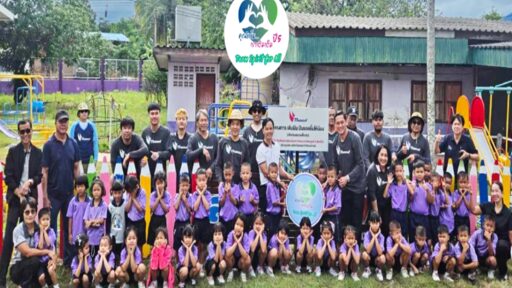
Implement the 2024 Annual Reforestation Project in Phrae Province in collaboration with the chairman and members of the community enterprise.
External Organizations/ Agencies
Mangrove Conservation Center 22 (Palian, Trang)
Seaman Company Limited
Collaboration with Biodiversity Networks
Organize meetings to promote awareness and foster community engagement in the mangrove reforestation project in Village No 2, Ban Yong Star, and Village No 4, Ban Thung Ruangthong, Palian District, Trang Province.
Improve and restore mangrove forests and ecosystems.
Biodiversity Risk
and Impact Assessment
- Business Risks: Biodiversity loss driven by climate change, pollution, and seasonal fluctuations could lead to a scarcity of natural resources essential for Thaioil Group’s operations.
- Regulatory Risks: The increasing stringency of environmental regulations, directly or indirectly linked to biodiversity, could raise business costs and complexities in operations.
- Reputational Risks: Failure to manage biodiversity effectively may harm Thaioil Group’s corporate image and erode stakeholder trust, particularly among customers, vendors, shareholders, investors and business partners who value biodiversity management.
- Environmental and Community Risks: Biodiversity loss could negatively affect community livelihoods and potentially create long-term impacts on Thaioil Group’s operations.
Therefore, Thaioil Group has applied several biodiversity risk assessment tools, including Integrated Biodiversity Assessment Tool (IBAT), ENCORE and WWF Biodiversity Risk Filter, and IUCN Red List. In addition, the Company has implemented the GRI Reporting Protocols to establish methodologies and guidelines for assessing risks related to biodiversity and ecosystem services.
Thaioil and Subsidiarity Biodiversity Management
Thaioil and Subsidiarity Biodiversity Management
Dependency-related Biodiversity Risks considered in Risk Assessment
Thaioil Group conducted risk assessment through the ENCORE tool for assessing the dependency on natural services. This tool ranks the level of dependency on natural services by industry type, such as oil refinery, power plants, and petrochemical. The assessment results indicate that Thaioil Group has a moderate level of dependency in the following issues:
- Water Scarcity
- Extreme Heat
- Land, Freshwater and Sea Use Change
- Tree Cover Loss
- Pollution
Nevertheless, in 2025, the result of the biodiversity risk assessment indicated the risk at low level, because Thaioil Group’s business operational areas are located outside the High-Biodiversity Wilderness Areas with distance between the Company’s operational areas and High-Biodiversity Wilderness Areas exceeds 10 kilometers. The result of the biodiversity assessment of Thaioil Group is illustrated in the table below:
Number of Operational Sites | Area of Operational Sites | ||
|---|---|---|---|
Rai | Hectare | ||
Total operational site | 1 | 605 | 245 |
Total operational site that are assessed | 1 | 605 | 245 |
Total operational sites that face the risk exposure | 0 | 0 | 0 |
Management Plan | 0 | 0 | 0 |
พื้นที่ปฏิบิติการทั้งหมด
จำนวนพื้นที่ปฏิบัติงาน
1
จำนวน
พื้นที่ปฏิบัติงาน
23,610.25
ไร่
พื้นที่ปฏิบิติการที่ได้รับการประเมินทั้งหมด
จำนวนพื้นที่ปฏิบัติงาน
1
จำนวน
พื้นที่ปฏิบัติงาน
23,610.25
ไร่
พื้นปฏิบิติการที่เผชิญความเสี่ยง
จำนวนพื้นที่ปฏิบัติงาน
0
จำนวน
พื้นที่ปฏิบัติงาน
0
ไร่
แผนการบริหารจัดการ
จำนวนพื้นที่ปฏิบัติงาน
0
จำนวน
พื้นที่ปฏิบัติงาน
0
ไร่
Remark: Thaioil Group’s operational site covers Thaioil Public Company Limite (TOP), Thai Lube Base Public Company Limited (TLB), Thai Paraxylene Company Limited (TPX), LABIX Company Limited (LABIX), TOP SPP Company Limited (TOPSPP) in Si Racha and Sak Chaisidhi Complany Limited (SAKC) in Rayong.
Mitigation
Hierarchy
Thaioil Group has adopted the PTT Group Biodiversity and Ecosystem Service Manual and Assessment from Dow Jones Sustainability Indices (DJSI) to manage biodiversity and ecosystem services and conduct biodiversity risk assessments.
The Company also applies the Mitigation Hierarchy approach to avoid, reduce, restore and regenerate, and transform environmental impacts on biodiversity throughout the value chain and continuously monitor performance, with the following operational approach:
- Avoid: Avoid conducting business operations in critical biodiversity areas through Quality, Security, Safety, Occupational Health, Environment, and Energy policy, covering environmental impact assessment (EIA) and risk management. This extends measures to the supply chain to achieve No Net Loss (NNL), Net Positive Impact (NPI) and No Gross Deforestation (NGD).
- Reduce: Thaioil Group reduces impacts on biodiversity through the “TOP CE WE GO” project together with setting clear targets for reducing water usage and consumption. Additionally, the Company initiated several biodiversity impact reduction projects, such as the Green Product project (Green Product – Promotion of Green Procurement) and the Wastewater Treatment System Cover project (ETP Cover project) to reduce the emission of volatile organic compounds (VOCs) into the environment.
- Restore & Regeneration: Focusing on restoring ecosystems to their original state and conserving biodiversity through the improvement of existing projects, such as reforestation projects. Thaioil Group has conducted reforestation projects in various areas, including over 8,300 rai in Phrae Province and over 300 rai of mangrove forest projects in Trang Province. The Company continuously monitors and evaluates the performance.
- Transform: Building cross-sector collaboration with the government, industry, and communities to restore ecosystems and promote biodiversity. As a member of the Thailand Mangrove Alliance, the Company signed an MOU (Memorandum of Understanding) with the Department of Marine and Coastal Resources aiming to expand and restore mangrove forests. Furthermore, the Company is expanding cooperation within companies both domestically and internally throughout the supply chain to develop sustainable products and create innovations that strengthen ecosystem resilience in the long term.
อีกทั้งยังได้ประยุกต์ใช้หลักการบรรเทาผลกระทบตามลำดับขั้น (Mitigation Hierarchy Principle) ในการป้องกัน หลีกเลี่ยง บรรเทา ฟื้นฟู และชดเชยผลกระทบทางสิ่งแวดล้อมต่อความหลากหลายทางชีวภาพตลอดห่วงโซ่คุณค่า
The Participation Network
on Biodiversity to mitigate impacts on ecosystem
External Organizations/ Agencies
The Institute of Marine Science of Burapha University, Bang Saen
Collaboration with Biodiversity Networks
Study the marine biodiversity at the port of Thai Oil Public Company Limited.
Cooperate on study project on the impact of crude oil spills on coral reef ecosystems and marine natural resources along the coasts of Si Chang Island and Khang Khao Island in Chonburi Province.
External Organizations/ Agencies
Office of Natural Resources and Environment, Chonburi Province
Naval Science Department
Department of Fisheries, Chonburi Province
Marine and Coastal Resources Office 2
Representatives from Environment and Pollution Control Office 13
Collaboration with Biodiversity Networks
Discuss and develop the monitoring and restoration plans with government agencies.
Determine the plan for monitoring and assessing environmental impacts in short, medium, and long term.
Develop the natural resources and the environmental restoration plan with the government sector and the public.
Participate in the signing ceremony of the Memorandum of Understanding (MOU) on cooperation with the Department of Marine and Coastal Resources (DMCR) as a partner in Thailand’s mangrove forest network.
External Organizations/ Agencies
Forest Resource Management Office 3 (Phrae)
Collaboration with Biodiversity Networks
Implement the 2024 Annual Reforestation Project in Phrae Province in collaboration with the chairman and members of the community enterprise.
External Organizations/ Agencies
Mangrove Conservation Center 22 (Palian, Trang)
Seaman Company Limited
Collaboration with Biodiversity Networks
Organize meetings to promote awareness and foster community engagement in the mangrove reforestation project in Village No 2, Ban Yong Star, and Village No 4, Ban Thung Ruangthong, Palian District, Trang Province.
Improve and restore mangrove forests and ecosystems.

Update : February 2024