Human Rights
Human Rights
Challenges, Risks,
Significant developments in human rights have occurred since the United Nations proclaimed the Universal Declaration on Human Rights nearly 70 years ago. This milestone introduced the concept of a “universal” human rights framework, which has evolved continuously to adapt to changing eras and contexts. In 2023, the Royal Government of Thailand declared the 2nd National Action Plan on Business and Human Rights for 2023-2027. Thaioil Group is committed to adhering to both international and Thai frameworks and principles on human rights to ensure that there are no human rights risks to all Thaioil’s stakeholders arising from its activities.
In 2025, Thaioil faced challenges from organizational restructuring, the construction of the Clean Fuel Project (CFP), and the Company’s strategies to expand the business into international markets. These developments may lead to risks of human rights violations for all stakeholders, including illegal labour practices, forced labour, and human rights risks associated with suppliers, such as forced or child labour, as well as community rights. These risks could negatively affect Thaioil’s reputation and its operations, including delays in project implementation and the potential rejection of the goods or services.
For these reasons, Thaioil Group has a business approach to integrate the human rights principle in all processes to align with international standards and relevant regulations. Thaioil Group has systematically investigated and monitored human issues covering human rights risk assessment, management, remediation, and the prevention of human rights violations throughout the supply chain. In addition, the Company has established a screening and monitoring process to mitigate potential human rights risks arising from its business operations, while building strong relationships with communities and stakeholders to prevent conflicts and maintain trust. The Company continuously enhances its policies to align with international requirements to strengthen long-term competitiveness and organizational sustainability.
Commitments and Targets
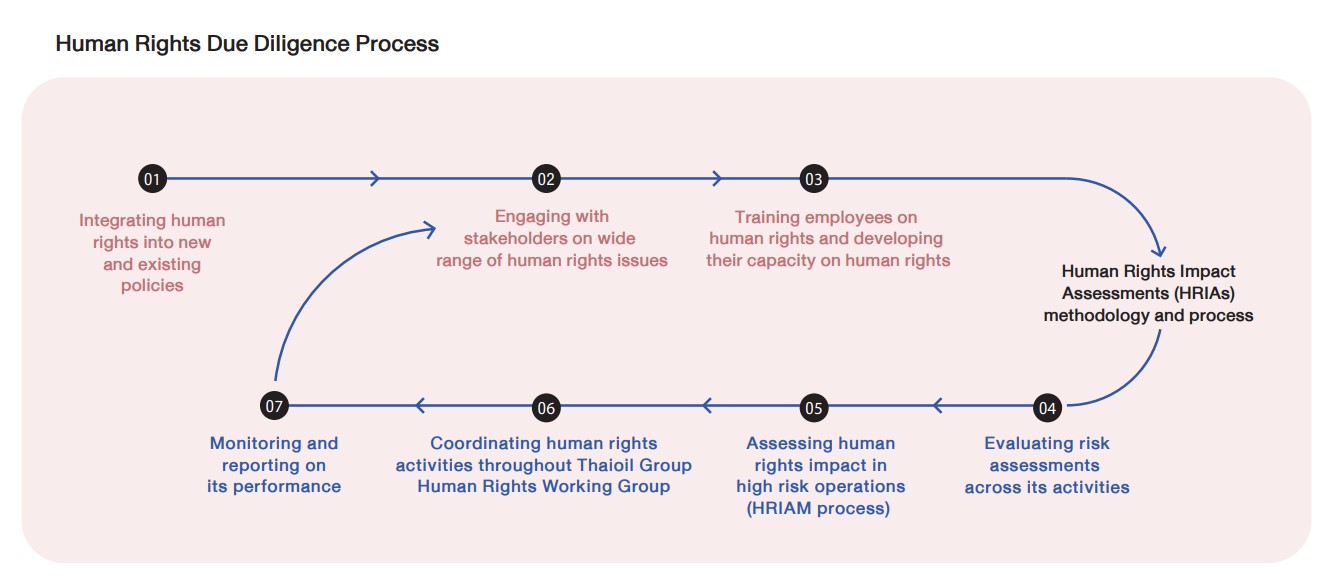
To demonstrate the human rights commitments across the “Thaioil Group Value Chain,” Thaioil Group has developed tools and conducted Human Rights Due Diligence (HRDD) for business activities and suppliers in the value chain every three years and monitored the performance on an annual basis. The tools and approaches are developed in accordance with international and national human rights impact assessment and management frameworks and the enterprise risk management criteria. This approach has been clearly described in the Thaioil Group Human Rights Impact Assessment and Management (HRIAM) Procedure.
Targets
Scope of Human Rights Due Diligence (HRDD) assessment in Thaioil Group's business activities.
Target 2025
100
Percentage
Long-term Target 2030
100
Percentage
Human rights violation complaints filed by the employees
Target 2025
0
Number of complaints
Long-term Target 2030
0
Number of complaints
Human rights violation complaints filed by the suppliers
Target 2025
0
Number of complaints
Long-term Target 2030
0
Number of complaints
Management Approach
and Performance
To achieve the set target and mitigate the risks to human rights, Thaioil Group has published two policies and the Thaioil Group Human Rights Roadmap. The roadmap encompasses the human rights prevention and protection for all stakeholders, including employees and contractors, society and communities, suppliers, and their employees. Moreover, the aspects of safety, security, and the environment are incorporated, serving as the foundation for sustainable growth and development in both social and environmental aspects, along with the Business Code of Conduct as described in the vision of the Thaioil Group. Thaioil Group reports on its human rights performance annually at the Corporate Governance and Sustainability Board Committee (Board Level). Additionally, Thaioil Group Human Rights Working Team has been appointed to oversee the implementation of the Thaioil Group’s Human Rights Policy, while ensuring that all human rights aspects are governed as planned.
The Human Rights Policy in the workplace provides Thaioil’s guidelines to ensure the practices of respecting human rights for employees, contractors, and community members. Meanwhile, the scope of the Business and Human Rights Policy for the Supply Chain has been extended to business partners, which covers suppliers, contractors, customers, and other partners such as joint ventures. These business partners are required to comply with and adhere to the policy. The essential contents of these policies are summarized as below:
Policy | Human Rights Policy in Workplace | Business and Human Rights Policy for Supply Chain |
|---|---|---|
References | Both policies have been reviewed to align with the principles of the United Nations Guiding Principles on Business and Human Rights (UNGPs), the Core Conventions of the International Labour Organization (ILO), and the United Nations Global Compact (UNGC). | |
Scope | All activities in Thaioil’s operations and joint ventures under Thaioil’s management control. | Activities in the operations of Thaioil’s business partners such as suppliers, customers, joint ventures without management control. |
Key Points | •All employees must strictly adhere to the international human rights principles. • Thaioil Group must educate the employees on the international human right principles to apply into their works and avoid the activities that may lead to human rights violations. • Thaioil Group compiles laws, rules, and public regulation documents into categories for the employees to study and provide sufficient and appropriate trainings on the relevant laws and regulation. • Thaioil Group employees, in any position, must have clear understanding on the relevant laws that are associated to their works and self-responsibility, and strictly follow them. Those who have any enquiry should contact the law office and must not act without instruction. • When the employees work aboard, the employee should study the local laws, traditions, and cultures of the destination to ensure that their products, samples, equipment, travel document and traveling or working purpose are not illegal and not contrary to the tradition and culture of that country. • This Policy also covers the other labour rights, policy comprehension, and grievance procedures. | • Business partners must strictly adhere to the international human rights principles and the code of conduct of this Policy. • Thaioil Group will regularly assess the activities of business partners to refrain from improper actions and strictly prevent the violation of human rights. •The Policy covers the rights of labour and community as well as environmental impacts, customer safety, anti-corruption, policy communication, and violation reporting. |
Remarks | • Those cases where the national laws do not align with the international human rights principles, where feasible, Thaioil will strive to operate with the highest human rights standards.
• Those cases where Thaioil does not have management control to the joint ventures, Thaioil will support and encourage joint ventures and business partners to comply with the same international human rights standards. | |
Thaioil Group’s Human Rights Impact Assessment and Management
Thaioil Group has conducted a comprehensive human rights risk assessment under the Enterprise Risk Management process, which is aligned with the international UN principles through the Thaioil Group Human Rights Impact Assessment and Management (HRIAM) procedure for human rights due diligence. The human rights risk assessment has been implemented comprehensively across the business operation and suppliers in the Company’s supply chain every three years and monitored performance on an annual basis.
Thaioil Group has conducted a comprehensive human rights risk assessment under the Enterprise Risk Management process, which is aligned with the international UN principles through the Thaioil Group Human Rights Impact Assessment and Management (HRIAM) procedure for human rights due diligence. The human rights risk assessment has been comprehensively implemented across the business operation and suppliers in the Company’s supply chain for every three years and monitored on an annual basis.
Human Rights Risk Assessment in Thaioil’s Operations 2025
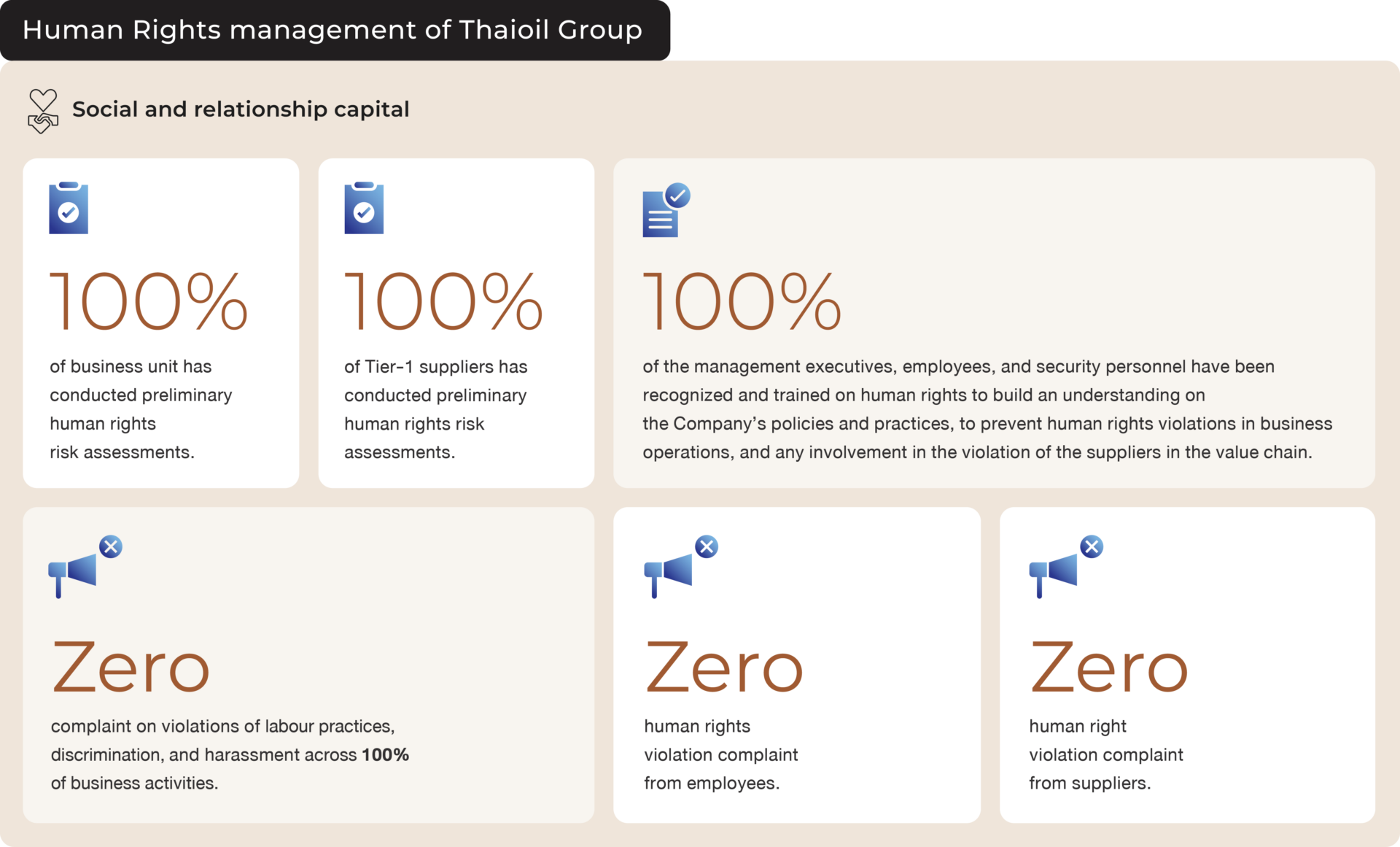
In 2025, Thaioil Group conducted Human Rights Due Diligence (HRDD) assessment for all business activities within Thaioil Group. The assessment covers 100% of the core business activities, other business unit activities, and joint ventures. The results of the assessment revealed that the Company had residual risk level of 36.4% from its business activities, with 100% of activities having implemented risk mitigation measures and performance monitoring conducted on an annual basis.
The scope of Human Rights Risks Assessment Conducted for Thaioil’s Operation includes:
- Refinery business (Thai Oil Public Company Limited)
- Petrochemical business (Thai Lube Base Public Company Limited, Thai Paraxylene Company Limited, LABIX Company Limited, TOPNEXT International Company Limited, and Sak Chaisidhi Company Limited)
- Power and Steam business (TOP SPP Company Limited)
- Supporting business (Thaioil Energy Service Company Limited and Thaioil Treasury Center Company Limited)
The Scope of Internal and External Stakeholders includes employees, business partners, customers, communities, as well as vulnerable groups, such as women, children, migrants, people with disabilities, elderly, people with illnesses, and LGBTIQ+.
Human Rights Risk Assessment in the Supply Chain 2025
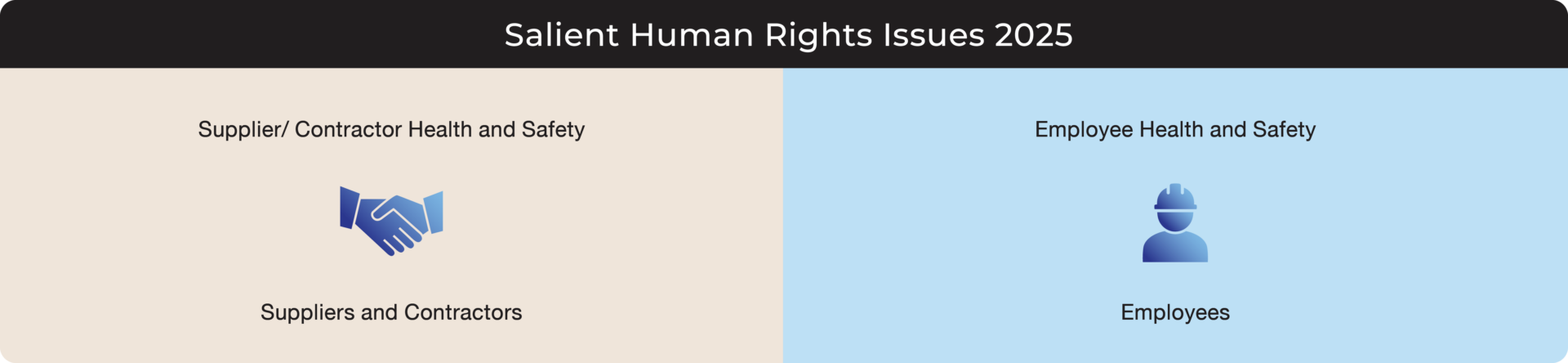
In 2025, Thaioil Group conducted a risk assessment on the Company’s Tier-1 Suppliers, covering 100% of the Tier-1 Suppliers in crude oil and general procurement. The assessment considered the severity and likelihood of each risk in accordance with the criteria of the Sustainable Code of Conduct for Suppliers of Thaioil and Subsidiaries (SCOC). The result of the risk assessment revealed that activities with potential risks accounted for 1.5% of all supplier activities, with the key human rights risks being related to working conditions and occupational health and safety. Furthermore, mitigation measures were implemented for 100% of the identified risks, with performance monitoring conducted on an annual basis.
Good Labour Practice (Labour Rights and Equality)
Thaioil Group places a high priority on labor rights and equality,encompassing the implementation of the annual business plan, project operations, the construction of the Clean Fuel Project (CFP), and the expansion into international markets. These activities require monitoring to ensure that they do not lead to any human rights violations, particularly those related to occupational health and safety of the workforce. To mitigate these risks, Thaioil Group has organized training, communications, and activities related to human rights for management executives and employees. These activities aim to increase the understanding of the Company’s policies and practices and prevent human rights violations in its operations and value chain. Moreover, to retain talents within the organization, Thaioil Group annually reviewed employee compensation and remuneration to ensure competitiveness with the industry peers and other leading Thai companies. The review process is aligned with the Human Rights Policy in the Workplace on Fair Treatment for Employees, the Equal Pay Policy, and the Non-Discrimination and Anti-Harassment Policy. Also, the Company promotes non-discrimination, respects Union’s Freedom of Association and Collective Bargaining, and supports the employment of people with disabilities, as specified by the government. With these implementations, the Company achieved a 91% of employee satisfaction in 2025.
In 2025, 74% of Thaioil’s employees were members of the Thai Oil Refinery Workers’ Union. Based on the assessment processes of all business activities, there were zero protests, strikes, and labor conflicts over the past 60 years.
Health Surveillance Procedure:
Thaioil Group provides regular annual health check-ups based on an employee’s age and risk factors. Initial screenings include chest X-rays and blood tests to evaluate potential lung and infectious diseases (including HIV/AIDS, Tuberculosis, and Malaria). If the company’s nursing or medical team identifies any abnormalities in the results, they will schedule an appointment for the employee with the company doctor. If the company doctor recommends further diagnosis, the employee will be referred to a specialist at a hospital. The Human Resources department will monitor the employees’ treatment and recovery. Once treatment is complete, a follow-up appointment is scheduled to assess their fitness to return to work.
Emerging Infectious Diseases Response Procedure:
Thaioil Group’s response to an emerging infectious disease is divided into three phases. Phase 1 (Pre-Outbreak) focuses on preparedness, including monitoring news and conducting drills. Phase 2 (During Outbreak) involves screening, treatment, implementing preventative measures like vaccinations, and issuing official company policies. Phase 3 (Post-Outbreak) includes a review of operations and a debriefing to identify areas for improvement.
Global Health Issues Prevention and Control Program: Thaioil Group has a program for employees who travel abroad for work, especially to areas with a high risk of communicable diseases. This program ensures the health of employees who travel to international or high-risk areas (e.g., zones with malaria or yellow fever). It includes mandated health checks, providing information about specific regional health risks, and requiring vaccinations before travel.
Good Community Practices (Community Rights)
Thaioil Group places great importance on engagement with communities surrounding its operational sites. The 3-Synchronization Principle is adopted to engage with representatives from Thaioil Group, representatives from the surrounding 10 communities of the operation sites, and governmental agencies, under the 5-Together Conceptual Framework, including Think together, Act together, Solve together, Learn together, and Develop together. This approach encourages community participation in their own development, enabling self-reliance and fostering strong, resilient communities. Furthermore, it serves as one of the communication channels used to provide updates on the construction progress of the Company’s production capacity expansion project, and to gather feedback and opinions from the community to collaboratively solve any issues that may arise. In 2025, Thaioil Group effectively managed community impacts through community engagement and enhanced a good quality of life by implementing projects and activities focusing on art and culture, healthcare, education, and the environment. Thaioil Group recognizes the importance of community rights as part of human rights, which are important to the Company.
Furthermore, Thaioil Group has conducted Environmental Impact Assessments for all the Company’s major projects, developed mitigation measures, and incorporated feedback from the communities as key stakeholders of the Company. In 2025, Thaioil Group organized community engagement activities through a variety of channels, including meetings with representatives of various groups, such as the Community Committee, Village Health Volunteers (VHVs), Fishery Group, Families surrounding refining fence Group, and Youth Group. The Company also invited the community to visit the construction site and held open houses to communicate the progress and upcoming construction plan while visiting the community around the construction projects.
Grievance Mechanisms
Thaioil Group has designated a coordinating function to receive reports on incidents or complaints directly from the communities in case where Thaioil Group’s activities have affected the communities. The main tool for collaboration with the communities is the Voice of Stakeholders (VOS) Management System, which focuses on effective complaints resolution that may arise during both normal operations and construction expansion project. The Company also maintains continuous communication with surrounding communities through online platforms and conducts regular community visits to build trust and understanding, address community concerns, and ensures that Thaioil Group effectively manages, maintains, and protects the rights of all stakeholders.
To access grievance mechanisms, stakeholders can submit grievances or concerns by explicitly noting the confidentiality of the document(s) to Chairman of the Board, Chairman of the Corporate Governance Committee, Chairman of the Audit Committee, Chief Executive Officer, President, Company Secretary, or email to [email protected]
Moreover, Thaioil Group also has specific complaint channels for each stakeholder group to monitor and collect feedback. For suppliers, the complaint channels are provided on Thaioil Group’s website, https://www.thaioilgroup.com/corporate-governance/whistle-blowing-measures/ or email to [email protected]
Key Highlighted Projects
In 2025, Thaioil Group continued to emphasize cultivating human right awareness to all stakeholders by implementing various activities in accordance with the 2nd National Action Plan on Business and Human Rights, such as:
- Labor and Contractor Employees Rights: The Company promoted understanding among employees through Human Rights E-Learning course on “Thaioil Academy”, along with providing regular safety training and activities for employees and contractor employees. In 2025, Thaioil Group continued to enhance employee well-being through the “5 Happiness” project to ensure employees receive the best care in accordance with their rights. The project covers all aspects of employee welfare, from their onboarding process until their retirement.
Furthermore, the Company has developed the “People First for Employee Support Policy” to respond to the employees’ needs. Meanwhile, the Company provides assistance to employees and their families, as well as members of the Thaioil Group Retired Employee Club, who may face challenges in respect to financial concerns, legal issues, physical health, mental health, alcohol and drug problems, marital problems, illness of family members, or childcare problems, etc. The support is offered in the form of benefits, welfare programs, or non-welfare initiatives. This program is available to eligible individuals 24 hours a day, seven day a week.
- Supplier Rights: The Company organized workshops and activities to enhance the understanding and knowledge of human rights for suppliers, such as the Supplier Seminar 2025 though online channel, along with raising awareness through the Sustainable Code of Conduct for Suppliers of Thaioil and Subsidiaries (SCOC), conducted Supplier ESG assessment with International Organization for Standardization (ISO) and suppliers, and implemented Supplier Development plan for the suppliers that failed the supplier ESG assessment.
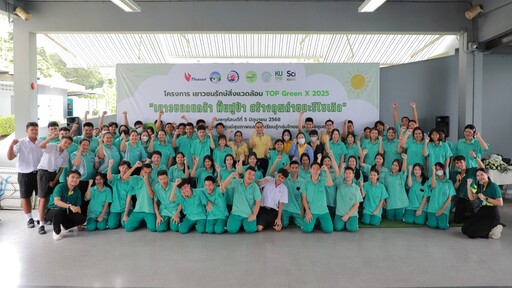
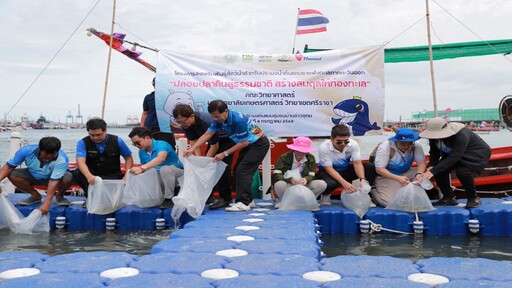
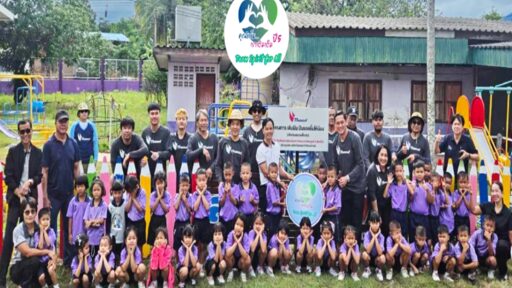
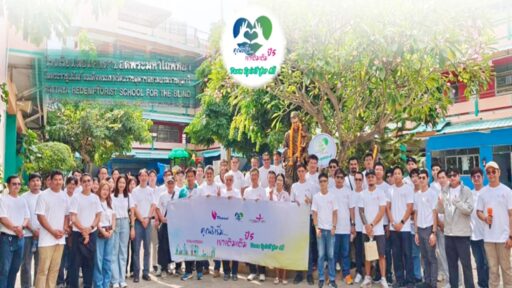
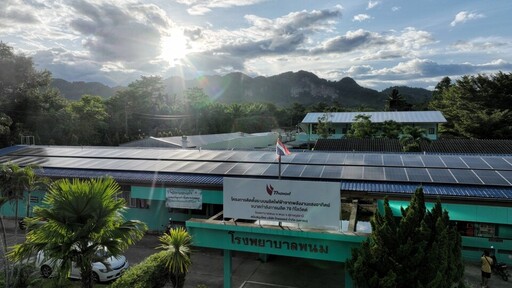
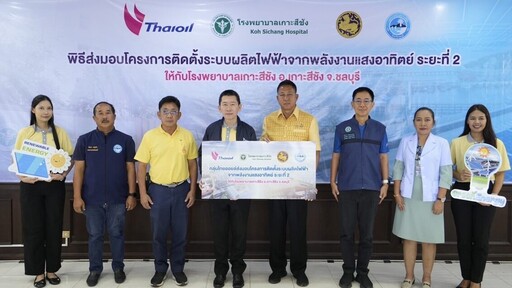
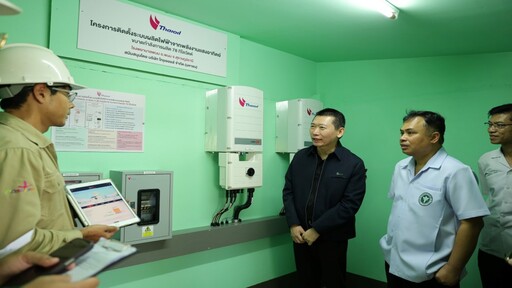
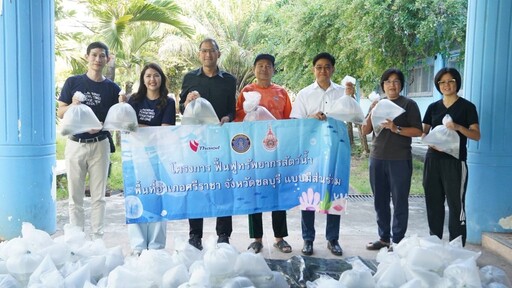
Community and Environment Rights: Thaioil Group continuously enhances community care through various projects based on the 3-Synchronization Principle. This involves collaboration among representatives from Thaioil Group, the 10 surrounding communities of the operation sites, and governmental agencies, working together under the 5-Together Conceptual Framework to sustainably improve the well-being of the people surrounding the refinery. The major project was the development of community products within communities surrounding the Thaioil Group. Furthermore, the Company has established a Net Zero GHG Emissions Pathway to achieve its Net Zero target by 2060. The Company would accelerate its Net Zero target to 2050 if it received support for economically viable technologies to strengthen the Company’s long-term business competitiveness.
- Community and Environment Rights: Thaioil Group continuously enhances community care through various projects based on the 3-Synchronization Principle. This involves collaboration between representatives from Thaioil Group, representatives from the surrounding 10 communities of the operation sites, and governmental agencies, working together under the 5-Together Conceptual Framework to sustainably improve the well-being of the people surrounding the refinery. For example, the Company supports project that develop community products within communities surrounding Thaioil Group. Furthermore, the Company has established a Net Zero GHG Emissions Pathway to achieve its Net Zero target by 2060.
2025
Performance
Vel pretium dolor tellus id purus felis tellus cursus. Amet turpis vel enim aliquet maecenas. Egestas nulla urna suspendisse cursus aliquam mauris facilisis.