Circular Economy
Challenges, Risks,
and Impacts
Furthermore, the growing volume of waste from the Clean Fuel Project (CFP), which is expected to start commercial operation in the future, presents a significant challenge for Thaioil Group. Despite these significant challenges, Thaioil Group has managed and optimized its resource consumption to achieve sustainable and stable business growth. At the same time, the Company seeks opportunities to apply the Circular Economy (CE) principles. This aims to create value from waste or discarded materials through research, development, and cooperation with peers and society.


Thaioil Group strives to enhance environmental management to optimize the efficiency of resource consumption. The Company has established the Circular Economy Working Team
to oversee the management of water, energy, environmentally friendly products and services, waste, and reuse optimization from upstream to downstream activities. Thaioil Group also integrated Circular Economy principles, in accordance with the international standard BS 8001:2017, into its sustainability strategy driving forward the circular economy under the environmental dimension. The Company also formed partnerships with the external stakeholders, such as governmental agencies, non-governmental agencies, and communities, to improve management efficiency, raise awareness, and provide values from Thaioil Group’s operations back to the society.
Targets

Water consumption reduction
Target 2025
95
Cubic meters per hour

Energy Efficiency Level of Thai Oil Public Company Limited(1)
Target 2025
2nd
Quartile
Long-term Target
1st
Since 2029
Quartile

Procurement proportion of environmentally friendly materials, equipment, and office supplies.
Target 2025
98
Percentage of total spending on the office supplies category
Long-term Target
98
Percentage of total spending on the office supplies category

Waste disposed to landfill
Target 2025
0
Percentage
Long-term Target
0
Percentage

Waste disposed through 3Rs
Target 2025
100
Percentage
Long-term Target
100
Percentage
Remark: Benchmarked the energy intensity index among other refinery businesses in the Asia-Pacific region, as ranked in the Solomon Benchmarking Report.
Management Approach
and Performance
Thaioil Group determines its circular economy strategy as “Thaioil CE WE GO” and established a working team to drive the plan and implementation towards the set targets.
The working team is responsible for framing, scoping, idea generation, feasibility studies, implementation, as well as monitoring and reporting. This aims to optimize resource consumption across Thaioil Group’s activities while also controlling and reducing the impacts of operations on ecosystems and communities in a sustainable manner. The working team regularly reports their performance to the management executives and stakeholders in the following four aspects:
Thaioil CE WE GO
Thaioil Group’s Circular Economy strategy

Water and Wastewater Management

Energy Conservation

Green Transformation

Opportunities for Upcycling
Water and
Wastewater Management
To focus on efficiency of water consumption both inside and outside the refinery
To study the feasibility of water discharge and seawater utilization.

Raw Water Management
Integrated water management is one of the circular economy framework components. The 3Rs (Reduce, Reuse Recycle) have been integrated across all dimensions of Thaioil Group’s water consumption. The Company has established the Water Procurement Working Team for the long-term production process. Their responsibilities include monitoring, assessing the situation, developing strategies, and planning for securing sufficient and sustainable water sources for current production processes and future expansion projects. The goal is to enhance efficiency in water usage throughout the production chain and to reduce the risk of natural water scarcity situations that may arise in the future. Furthermore, all operational sites have a water management plan in place.
Water Efficiency Management Programs
Water use assessment to identify opportunities for water efficiency improvement
Thaioil Group assigned the long-term water supply management workforce to manage and identify opportunities to improve water efficiency according to the 3Rs principles, such as Reuse backwash water at filtration package, which can significantly reduce raw water use. In addition, Thaioil Group also continuously monitors and reviews process to implement effective water measures to achieve and improve efficiency through systematic water management.

Application of water recycling
Thaioil is currently studying the feasibility of enhancing and implementing water recycling to promote its potential in processes and operations. Relevant projects include:
1. TOP SPP water recovery
Description: Water recovery from the blow down pond, which is the source of water from the boiler blowdown, backwash, condensate from steam leak, is brought back into the clarifier tank where it is filtered before being sent as filtered water to be used primarily in the cooling tower system.
Expected outcome: saving raw water from external source (9-12 tons per hour)
2. The Blowdown Reverse Osmosis (RO) Project
Description: the cooling tower blow down is recycled and reused as make up water by Reverse Osmosis (RO). Water from RO will be sent back to fill the cooling tower again.
Expected outcome: saving water make up (10-15 tons per hour)


3. The development of a 'Water Dashboard’
Description: implement and continue to monitor water situation via Water Dashboard.
Expected outcome: closely monitor water quantity of Chonburi and Rayong area.
Water Risk Management Programs
Thaioil has a systematic management approach regarding the assessment of future water quantities, future water quality-related risks, and potential regulatory changes at the local level, as outlined below:
Assessment of future water quantities available
Thaioil uses the WRI Aqueduct Atlas to estimate the change and forecast water demand in Thaioil’s operation site at Chonburi provinces where the result shows medium-high risk level. Thaioil has managed the water risk. The water risk management focuses on how to deal with drought and water shortage in Rayong and Chonburi provinces where operations locate as well as Business Continuity Plan (BCP) in case of water shortage. Through our participation with the East Water War Room, we regularly monitor local water demand and supply.
Assessment of future water quality-related risks
Thaioil has regularly monitored the water quality and managed future water quality-related risks by applying Raw Water Quality Standard that identifies the standard level of each substance contaminating in water sold by Thaioil’s suppliers. The risk assessment focus on how to deal with future change in water quality as well as Business Continuity Plan (BCP) in case of water quality changed.
Assessment of future potential regulatory changes at a local level
Thaioil conducts water risk assessment covering various aspects including future potential regulatory changes according to Water Resource Act, 2018 by assigning the long-term water supply management workforce to regularly update the water related policy that covers issues such as details of each type of water usage, permission to use type 2 and type 3 water, fees for permission license to use type 2 and type 3 water and criteria for fee, payment and fee exemption of type 2 and type 3 water.
Furthermore, Thaioil continuously participated in various water related committees in national, eastern regional, local, and PTT Group levels to monitor regulatory changes. We foresee regulatory changes from review and propose updates. The new standards enacted by Ministry of Industry align Thailand’s wastewater standards with international ones and the Office of the National Water Resources announced “Water User Organization” to establish stakeholder collaboration which Thaioil has already participated in. However, there is minimal impact here as Thaioil has monitored these changes through the PTT Group Water Committee to plan accordingly. Our strong relationship with local authorities and long-term contracts with water suppliers allow us to mitigate risk of regulatory changes. Meetings with Royal Irrigation Department (RID), Thailand, East Water and participation in the Federation of Industrial of Thailand water management group gave us insights and negotiation on water prices.
Based on the estimates of future potential regulatory changes on a local level, the price for current quota will remain unchanged as we have renewed the long-term contract in 2015. The price for additional quota for the future may fall in between current prices set by RID and East Water prices due to investment in the infrastructure to draw water from the remote reservoir that temporary store excess water from agricultural activities before discharging to sea which is the flood protection to for the area surrounding the remoted reservoir. For East Water, water price according to the current contract will increase from new price structure but East Water will invest in water facility projects which advantage to Thaioil. However, the Company prepared long term water strategy to diversify water supply sources to reduce portion of water consumption from East Water as according to PTT group water supply meeting.
Scope of Risks Assessment
Our scope of water risk assessment covers own operation and supply chain activity and product use phase.
Water Risk Assessment – Upstream and downstream (Product Use Phase)
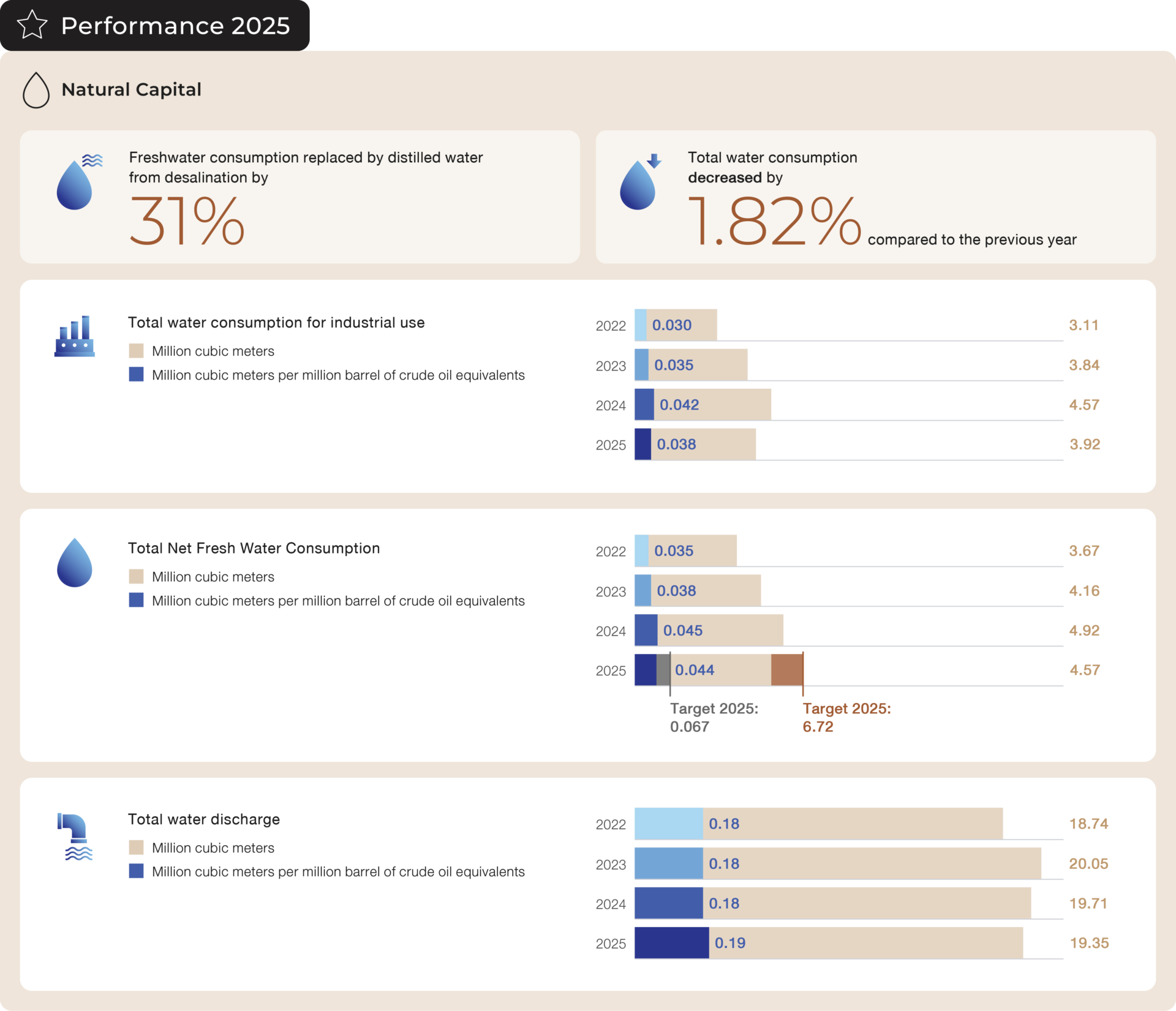
Thaioil adopts WWF Water Filter Tool to determine the scope of water risk assessment, evaluating water-related impacts and dependency-related water risks within the production processes. In this assessment, the Company has implemented risk management measures by utilizing desalination technology. For 2025, the target is the replacement of freshwater consumption with distilled water from desalination, aiming for a 23% substitution.
Regarding the product use phase, the Company focuses on assessing potential impacts on its customers’ operations during product usage. The tool includes an Operation Risk Questionnaire, covering various risk dimensions such as physical risks, legal risks, and risks to corporate reputation. However, this risk assessment questionnaire can be applied across multiple industries, including oil, natural gas, and fuel sectors. The assessment results are as follows:

Physical Risk Assessment
This assessment evaluates water usage in various activities, such as the risk of contamination in wastewater, the need for treatment and purification at the site before and after use, and the impact on water quality flowing into downstream areas. The evaluation considers physical, chemical, and biological factors. A Basin Physical Risk score of 2.54 reflects a moderate risk level related to water scarcity in the watershed, while an Operational Physical Risk score of 4.02 indicates a high level of water dependency and increased risk arising from water quantity and quality in the product usage process.
Regulatory Risk Assessment
The regulatory risk assessment covers compliance with legal standards for wastewater quality at the operational site, potential penalties for violations of water-related laws in the past year, and the stringency and enforcement of water-related regulations applicable to the facility. A Basin Regulatory Risk score of 2.07 indicates a moderate level of regulatory strictness within the watershed, while an Operational Regulatory Risk score of 1.06 reflects a low level of regulatory compliance risk at the actual operational level of the customer.
Reputational Risk Assessment
The assessment addresses sensitivities related to social, ecological, and political dimensions of water within the area of operation. Key considerations include the cultural significance of water to local communities, aquatic biodiversity, the level of media attention surrounding water-related issues, and the presence of water-related conflicts within the watershed. A Basin Reputational Risk score of 2.74 indicates a moderate level of reputational risk within the watershed. Meanwhile, an Operational Reputational Risk score of 2.27 reflects a moderate reputational risk associated with customers’ water use, which may attract increased attention from the public or media.
The results from risk assessment of product use phase of Thaioil Group’s found that contamination to public water sources is low to medium level.
Wastewater Management
Thaioil Group controls the quality of discharged water to the level required by regulatory requirements prior to releasing treated water from the operational areas. This resulted in a wastewater discharge volume reduction. Furthermore, Thaioil Group has designed the wastewater management system to efficiently optimize resource and energy consumption. The wastewater has been categorized into three types with different levels of contamination, as follows:

Type 1
Effluents from the operation process.

Type 2
Continuously Oil-contaminated Water (COC)
water used for washing or rainwater runoff at production sites.

Type 3
Accidentally Oil-contaminated Water (AOC)
rainwater runoff in Thaioil Group’s operational sites, water used for washing for areas without oil contamination, water used for fire drills, and water from cooling towers, or steam generators.
Type 1
Effluents from the operation process
Type 2
Continuously Oil Contaminated Water (COC)
water used for washing or rainwater runoff at production sites.
Type 3
Accidentally Oil-Contaminated Water (AOC)
rainwater runoff in Thaioil’s Group operational sites, water used for washing for areas without oil contamination, water used for fire drills, and water from cooling towers, or stream generators.
Each type of wastewater is treated by Thaioil Group’s wastewater treatment system, which operates 24 hours a day with constant monitoring of treated water quality. Also, the system directly reports the value of Chemical Oxygen Demand online (COD Online) to the Department of Industrial Works in a real time manner. The quality of wastewater is tested by Thaioil Group’s laboratories and verified by external independent third parties to ensure that the quality of treated water is higher than the quality level required by the standards. In addition, the Company also emphasizes on human capital development through several activities, such as training operators overseeing wastewater treatment systems to increase the capability in wastewater management efficiency. In 2025, Thaioil Group successfully maintained wastewater quality above regulatory requirements.
Key Highlighted Projects
In 2025, Thaioil Group has implemented several projects in three main areas as follows:
1. 3Rs in Process: Water Management Projects, for example
- A water consumption reduction project in U-2230 (APU-C) production unit.
- TOP SPP water recovery project for TOPSPP power plant.
- A project to reduce backwashing in the side stream filters of Q-4707 and Q-85010A cooling towers.
- A maintenance project for leaking pipes.
- The ‘Swop SWS-2 to SWS-5 (APU-C) to save LP stream’ project is the one in which the Company will switch to operating Sour Water Stripper 5 to recover steam or condensates instead of Sour Water Stripper 2 to save LP steam.
- A backwash water recovery project from the filtration package.
2. Sustainable water management projects, for example
- The TOPSPP Blowdown Reverse Osmosis (RO) Project to filter blowdown water to freshwater.
- The continued operation of the desalination unit to increase the proportion of water consumption derived from renewable resources or seawater instead of freshwater from natural water source.
3. The ‘Water Dashboard’ development project
The ‘Water Dashboard’ development project has been developed to closely monitor water consumption. This project can support efficient water management and effective respond to unanticipated changes in water conditions.
2025
Performances
Energy
Conservation
To use energy resources wisely.
To carry out projects for promoting the sustainable use of renewable energy both inside and outside the organization.

Energy Management
Thaioil Group places great importance on energy management by setting the Energy Intensity Index (EII) as a key performance indicator (Corporate KPI) for the organization. A dedicated working committee on energy management and oil loss reduction is tasked with driving operations in this area. In 2025, Thaioil Group consumed approximately 49.00 gigajoules of energy, an increase of 2.17% compared to the previous year. However, Thaioil Group remains committed to continuously implementing energy efficiency projects to ensure optimal energy use across all relevant production capacities. In 2025, Thaioil Group completed a total of 23 Energy Efficiency Improvement (EE) projects, resulting in energy savings of 525,226 gigajoules, decreasing greenhouse gas emissions by over 36,115 tonnes of carbon dioxide equivalent, and translating into cost savings of approximately 269.8 million baht.
Energy audits to identify opportunities for improving energy performance
In recognition of the importance of energy efficiency, Thaioil operates its business by adhering to the internationally recognized standard for energy management systems, ISO 50001:2018. In 2025, this energy management standard covers site operations: Thai Lube Base and Crude Distillation Unit-3 (CDU). Compliance with ISO 50001:2018 allows Thaioil to quantify energy types, energy quantities and identify relevant variables of significant energy use and implement energy management and control systems to improve energy performance.
Thaioil has established the Energy Management & Loss Improvement Committee to oversee energy consumption and comply with the Energy Conservation strategy. This committee is tasked with communicating with employees to raise awareness of energy conservation and control, identify opportunities for improving energy performance, as well as monitoring energy consumption by identifying usage across various operation teams. They also provide energy conservation training to relevant operation teams and regularly report energy management results to executives.
Additionally, Energy Management & Loss Improvement Committee performs energy audits as required by laws and regulations. According to the internal audit result in 2025, it was identified that operation was the main source of energy consumption. Meanwhile, natural gas in the furnace, heater, and utility was identified as the highest shares, accounting for 47.5% of energy consumption by fuel types. Thus, these can be opportunities for Thaioil to improve energy performance by focusing on reduction of energy consumption in operation and in the furnace, heater, and utility system.
Key Highlighted Projects
Energy efficiency projects implemented in 2025 as follows:
Thai Oil Refining Public Company Limited
- The improvement and installation of Air – Preheater at Crude Distillation Unit – 3 has increased the temperature of combustion air before entering the furnace, resulting in a reduction of fuel consumption in the furnace.
- The replacement of the catalyst in the Hydrocracking Unit – 2 has resulted in an increased yield of higher-value products and reducing energy consumption in the production process.
Thai Lube Base Public Company Limited (TLB)
- The descaling of furnaces and feed preheat train of Vacuum Distillation Unit (VDU) and Hot Oil Unit (HOU) to enhance heat transfer efficiency and reduce energy losses.
- The installation of the filtered water pipeline from the storage tank to the water reservoir ensures that the filtered water meets the target quality. As a result, the Company can suspend the supply of filtered water, which reduces unnecessary expenses and can significantly decrease electricity consumption by allowing shutdown of the pumps and electrical appliances in the water filtration system.
Thai Paraxylene Company Limited (TPX)
- The optimitimization of control system parameters for the Adsorption Chamber Control System (ACCS), adjustment of water injection rates into the system, and line flush optimization at the Parex Unit resulted in efficient energy reduction in the production process.
- Reduced the energy consumption in the Deheptainizer at the Isomar Unit by increasing the temperature of the feedstock through adjusting the outlet temperature set point of the feedstock into the Parex Unit, which is the heat source for the feedstock, thus greatly improving heat exchange.
- Diverted a portion of the off-gas generated by the Isomar Unit is routed back to the Hydrogen Manufacturing Unit (HMU) rather than being used as furnace fuel, thereby reducing natural gas (NG) consumption.
LABIX Company Limited (LABIX)
- Increased the amount of normal paraffin in the product within the product's specifications reduces the heat energy required to separate normal paraffin from the product.
- Optimized the amount of chemicals used in the production process reduces heat energy consumption in the distillation column for separating chemicals from normal paraffin.
TOP SPP Company Limited (TOP SPP)
- Optimized production process by decommissioning one gas turbine from active duty to serve as a standby unit. This initiatives has reduced electricity and steam production costs, increased the utilization rate of the production unit, enhanced operational flexibility. Furthermore, it mitigates production opportunity losses during scheduled maintenance or unplanned downtim
The top two projects that delivered the highest energy efficiency improvements in 2025 included the optimization of the production process by shutting down one gas turbine and using it as a backup unit, reducing the electricity and steam production costs, increasing the utilization rate of the production unit, enhancing operational flexibility, and reducing production losses if the gas turbine is shut down for maintenance. Another project was to clean the Air Preheater at Crude Distillation Unit – 3 to improve heat-exchange efficiency and, consequently, enhance energy utilization. Both projects reduced energy consumption by 360,388 gigajoules, representing 68.6% of the total energy savings, or the equivalent of 20,254 tons of carbon dioxide per year.
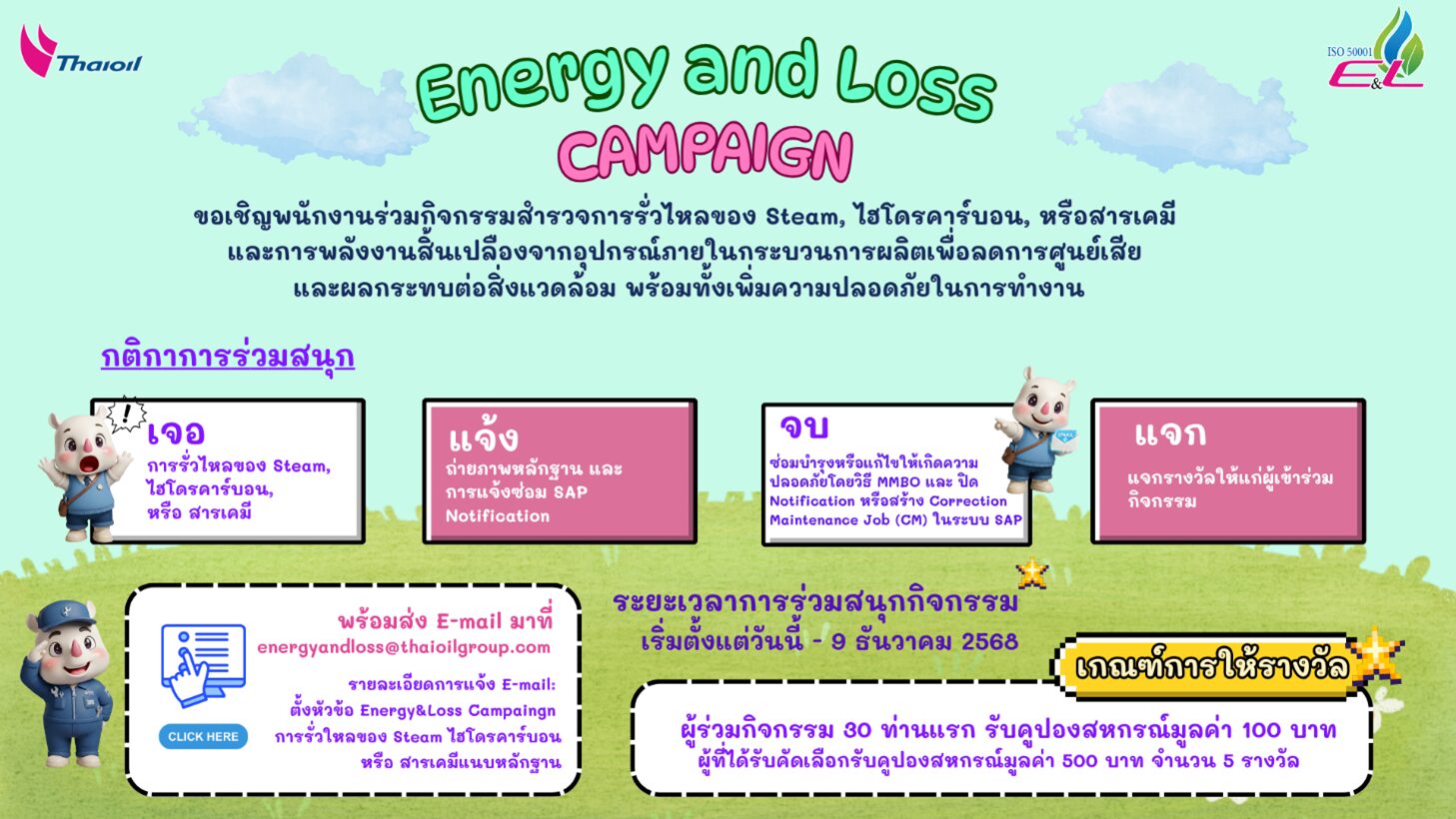
Furthermore, Thaioil Group has implemented energy conservation initiatives in the workplace by supporting and encouraging employees to recognize the importance of energy efficiency through various activities and communication channels. These include competitions that invited employees to propose creative ideas for improving energy efficiency, the publication of articles and updates on energy conservation activities in the “Energy and Loss” column of the Company’s monthly Akanee magazine, attaching energy-saving awareness posters and energy conservation tips in public areas within office, and the organization of activity booths to communicate and promote the energy conservation performance. In 2025, the working team organized the “Detect–Report–and Pay upon completion” campaign to identify leakages of steam, hydrocarbons, or chemicals, as well as inefficient energy use from equipment in the production process. In addition, the Company invited the employees to participate in the Thaioil Group’s Energy Management Survey to support the dissemination and implementation of the energy conservation policy.
The management and reduction of oil losses within the Thaioil Group foster employee engagement in energy conservation, reduce losses and environmental impacts, and enhance workplace safety. These efforts also elevate organizational activities and further promote employee awareness of the importance of energy conservation.
The project promoting employee participation in a competition for creative ideas on efficient energy use within the company
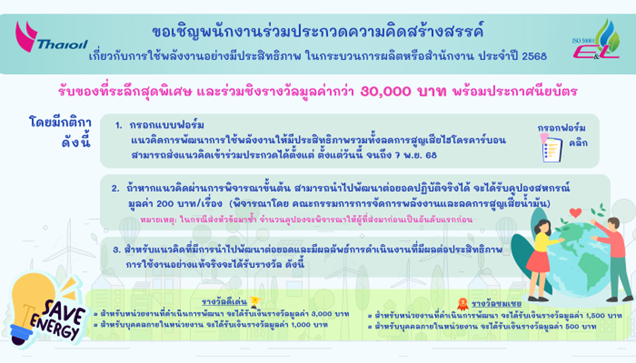
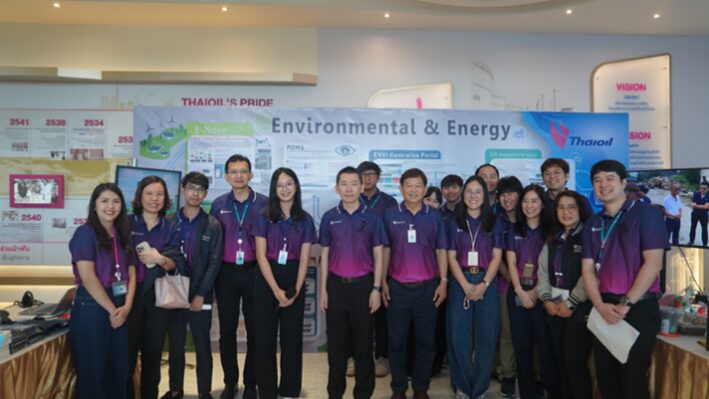
An exhibition activity to publicize the energy conservation achievements at the 2025 annual QSHE Day event
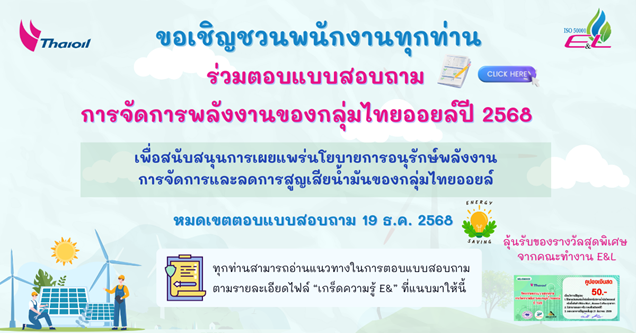
An activity inviting employees to participate in the Thaioil Group’s 2025 Energy Management Survey.
Energy & Loss Campaign activity, which involves the detection of steam, hydrocarbon, or chemical leaks, as well as the identification of excessive energy consumption from equipment within the production process
In 2025, Thaioil Group submitted six energy efficiency improvement and greenhouse gas reduction projects implemented in 2024 to obtain certification for greenhouse gas reduction of 2,748 tons of carbon dioxide equivalent under the Low Emission Support Scheme (LESS) of the Thailand Greenhouse Gas Management Organization (Public Organization) (TGO). The Company has achieved total GHG reductions of 2,748 tonnes of carbon dioxide equivalent from energy-related initiatives. This includes the replacement of the catalyst in the hydrocracker unit 1 resulted in a reduction in the amount of fuel used in the furnace, as the temperature of the feed entering the reactor was lowered, the optimization of heat exchanger outlet temperatures through improved control of solvent losses carried over with products at the Methyl Pyrrolidone Refining Process (MPU) unit of Thai Lube Base Public Company Limited, The exclusion of the re-distillation of the Isomar Stripper Bottom in the Extractive Distillation Sulfolane Unit of Thai Paraxylene Company Limited, the reduction of benzene outlet temperatures from heat exchangers at the Detal Plus production unit, the energy consumption reduction through optimization of condensing steam turbine operations at TOP SPP Company Limited and energy savings in lighting systems through the replacement of equipment with higher energy efficiency at Sak Chaisidhi Company Limited.
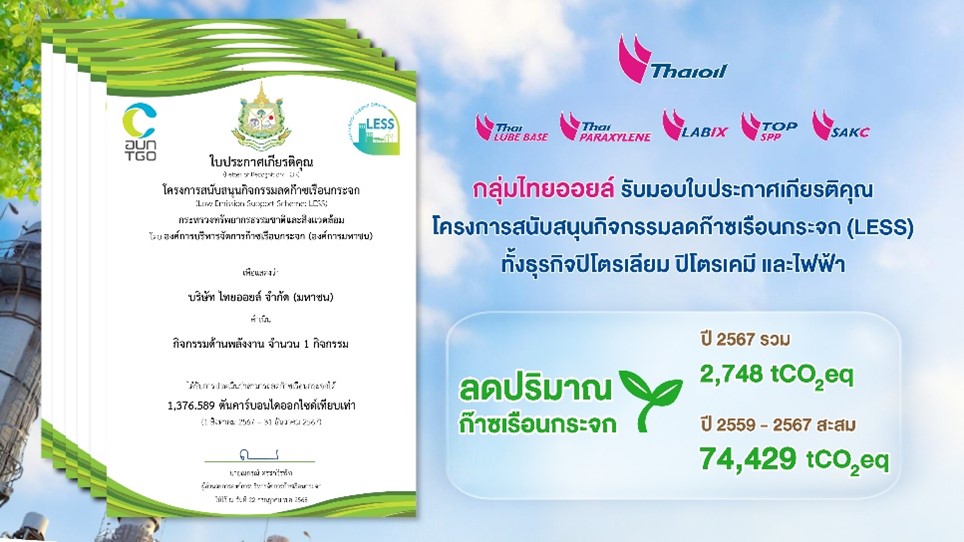
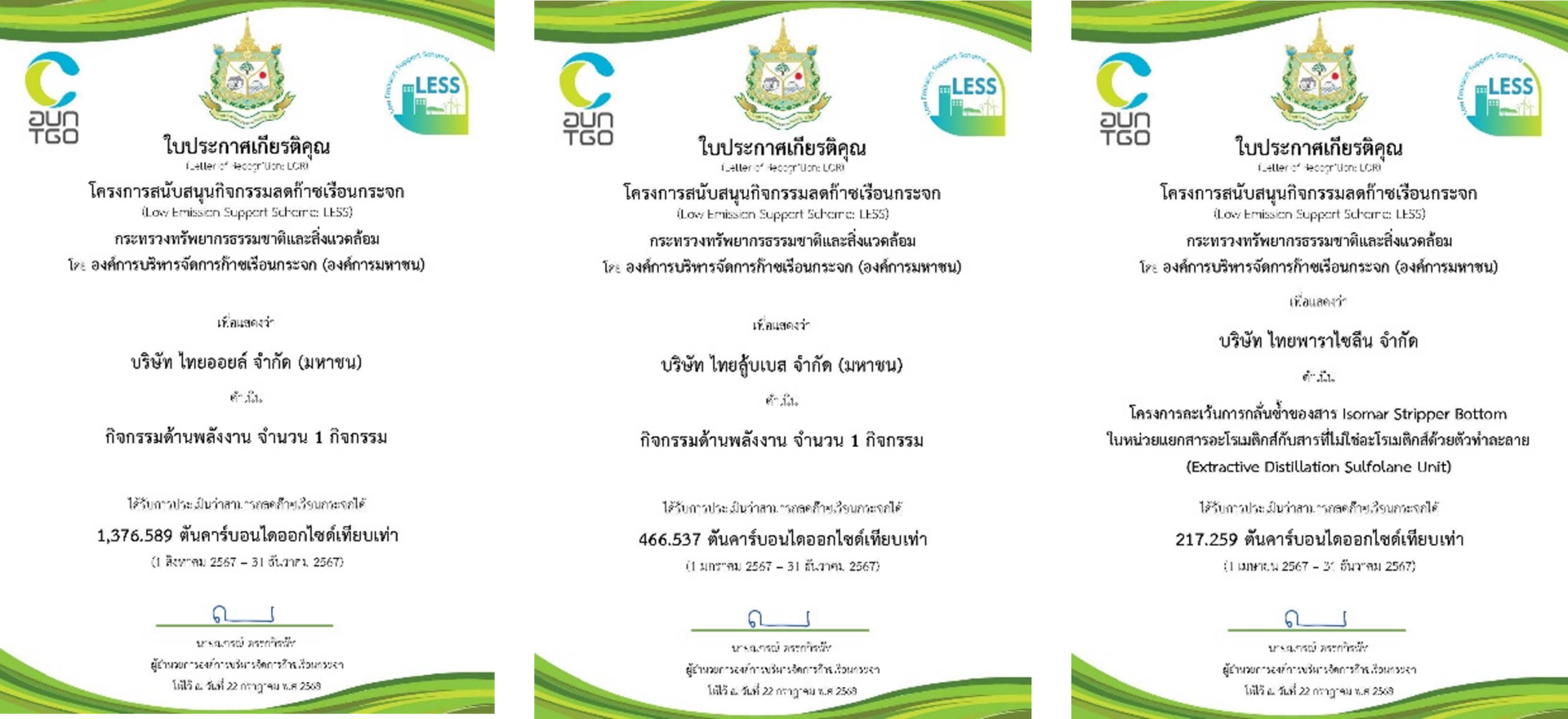
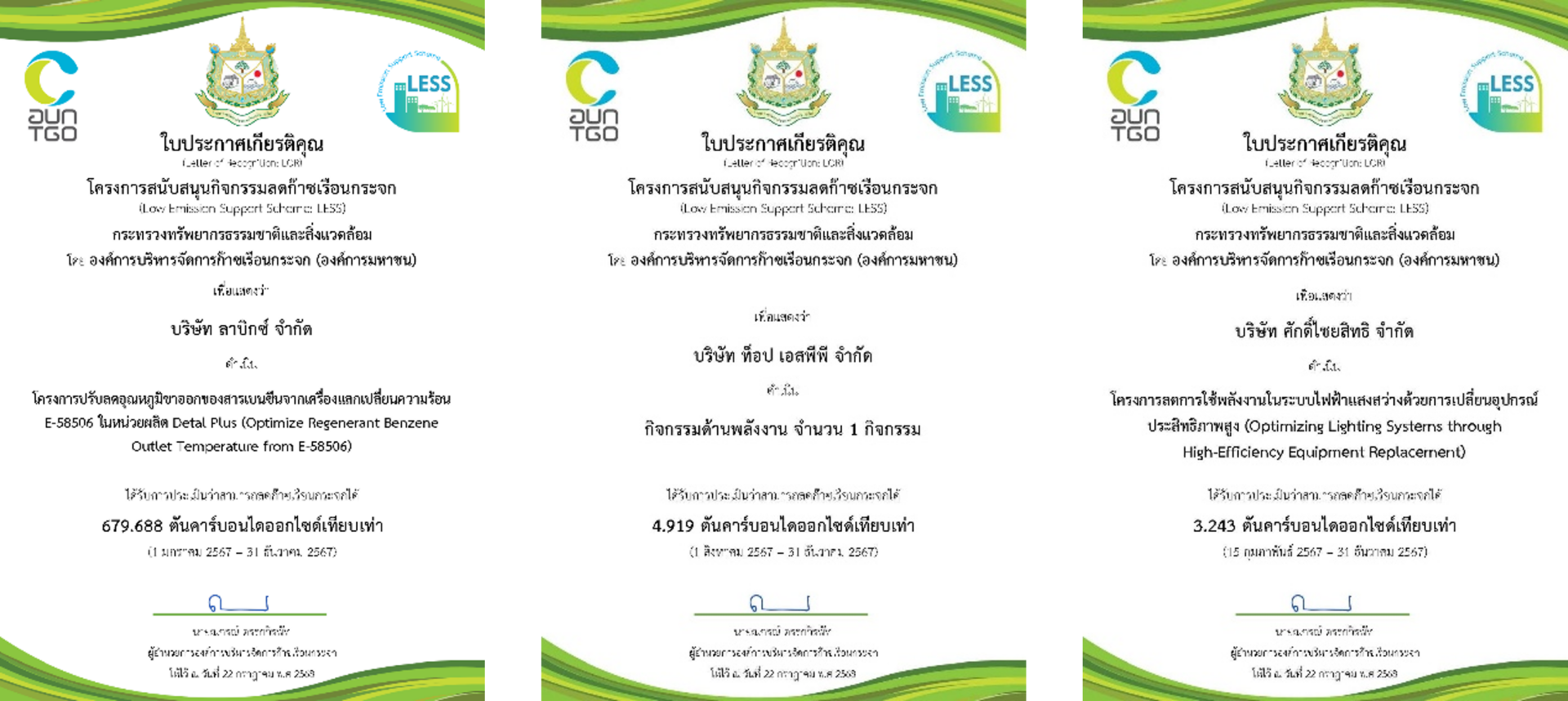
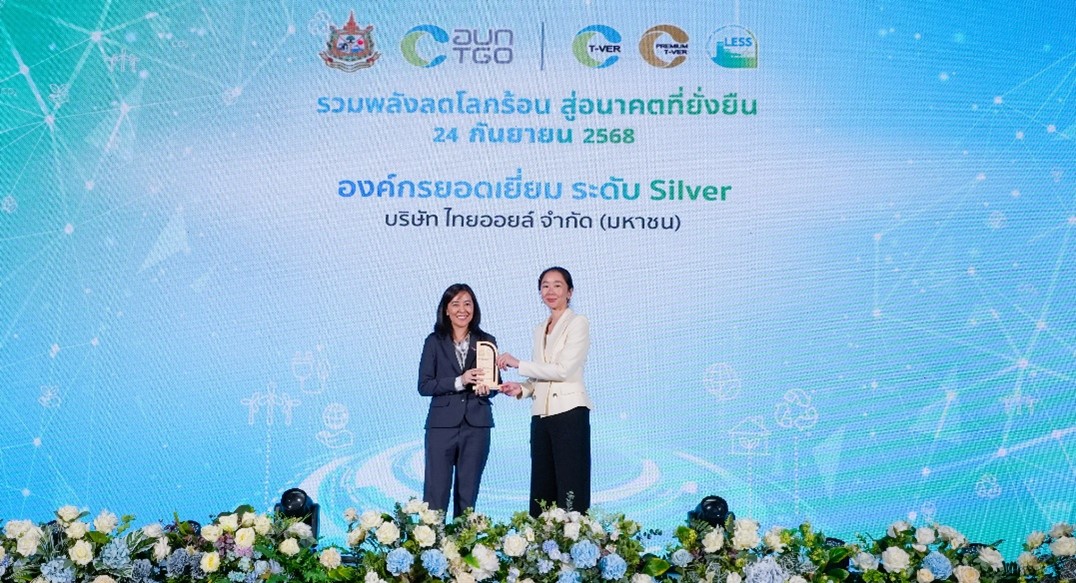
Furthermore, in 2025, the Company received the LESS Friendship Awards 2025, Silver Level, from the Thailand Greenhouse Gas Management Organization (Public Organization), in recognition of its significant role in reducing greenhouse gas emissions through the Low Emission Support Scheme (LESS) project. The awards also reflect the Company's promotion of activities and its sustainable expansion of greenhouse gas reduction and carbon sequestration efforts with partners.
2025
Performances
In 2023, Thaioil Group demonstrated an increase in overall production capacity. This was attributed to stabilized crude oil prices while the national energy demands increased in line with the national economic recovery. This positive trend enhanced the Company’s refinery operational efficiency, especially for the TOP SPP expansion project that was commissioned as planned and secured electricity and steam distribution to Thaioil Group
As a result, the energy intensity index of Thai Oil Public Company Limited and Thai Paraxylene Company Limited exceeded the target. On the other hand, LABIX Company Limited continued to increase its energy efficiency through several projects Despite Thai Lube Base Public Company Limited gained benefits from efficient electricity and steam production, the energy intensity index has declined due to production capacity being lower than planned and Thaioil Group’s management or production plan based on the market demands to maximize hydrocarbon values, leading to an increase in the proportion of petroleum production and a decrease in the proportion of lubricants due to stagnant demand for lubricants.
According to the Solomon Benchmarking Report 2022, Thai Oil Public Company Limited had better energy efficiency than in 2020. In comparison with industrial peers in the Asia-Pacific region, the Company’s energy efficiency ranking was classified as the 3rd Quartile, which declined from the 2nd Quartile in 2020. The main reason of this decline was attributed to the reduced number of industrial peers during the benchmarking process due to refinery shutdowns or decisions to forego benchmarking. Despite the overall improvement in energy efficiency, the Company still faced challenges in performance grouping due to a smaller number of industrial peers. Although, the Company showed positive improvement in energy efficiency performance in 2022, the overall energy consumption is expected to reduce while the energy efficiency is expected to improve once all new production units in the Clean Fuel Project (CFP) are commercially operated. This is because the new production unit of the CFP has better energy efficiency than the existing production units. On the other hand, compared to the other companies in the Solomon Benchmarking, Thai Lube Base Public Company Limited and Thai Paraxylene Company Limited maintained energy efficiency in the 1st Third, and 2nd Quartile, respectively.
For LABIX Company Limited, the Company achieved exceptional results in implementing its energy efficiency improvement projects in accordance with its energy efficiency improvement plan. This led to the Company achieving its energy intensity index target and demonstrating sustained improvement each year.
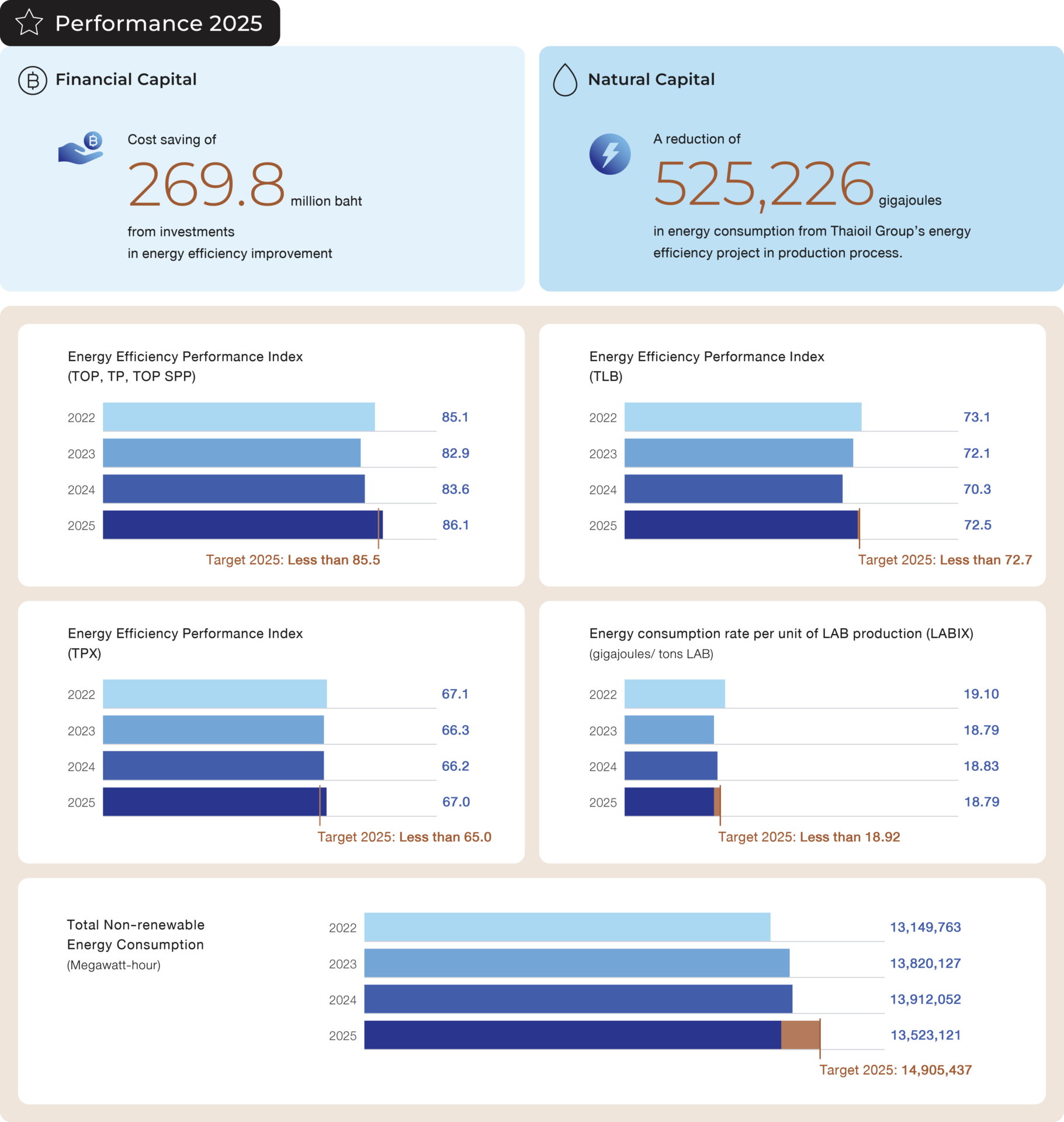
In 2025, Thaioil Group can maintain business continuity and a high level of plant utilization above the business plan, while also carrying out scheduled major turnaround (MTA) maintenance. Thai Oil Public Company Limited has an increase in its Energy Intensity Index in 2025 compared with 2024, but it still exceeds its target. This was partly due to major turnaround activities at several production units during July–September, which reduced productivity. Meanwhile, the energy consumption during the maintenance and system preparation was higher than originally planned. However, during this major turnaround, the Company took the opportunity to implement energy-saving projects that can only be carried out during such maintenance periods to improve long-term energy efficiency, such as the replacement of the air pre-heater at Crude Distillation Unit 3.
In 2025, Thai Lube Base Public Company Limited has an increase in its Energy Intensity Index compared with 2024. This was mainly due to the shutdown of a high-efficiency plate-and-frame heat exchanger (200L-E-122A/B) since April, and the scheduled major turnaround (MTA) conducted during July–August. During the major turnaround (MTA) period, the Company also carried out improvements to certain systems and equipment to enhance long-term energy efficiency. However, the Energy Intensity Index in 2025 remained in line with the target because the overall productivity rates were higher than expected. Actual production exceeded the corporate target, and asphalt production increased due to the use of high-sulfur, lower-value short residue. As a result, the overall energy efficiency of the production process remained at an appropriate level.
In 2025, Thai Paraxylene Company Limited has an increase in its Energy Intensity Index compared with 2024. However, the energy efficiency index did not meet the planned target. The primary reason for this was additional energy consumption during the major turnaround (MTA) from July to August. Also, production output was lower than expected. Moreover, the paraxylene production unit underwent a maintenance shutdown in September due to a heat exchanger failure. These lead to higher energy consumption during that period. In order to address this issue, the Company has continually implemented energy-efficiency improvement and reduction projects. For example, energy consumption at the Deheptanizer of the Isomar Unit was reduced by increasing the feed temperature using residual heat from the Parex Unit, thereby improving overall energy efficiency in the production process.
In 2025, LABIX Company Limited had lower energy consumption per unit of LAB (Linear Alkylbenzene) production than in 2024. Moreover, the energy consumption per unit of LAB production in 2025 remained above the target. This was mainly due to a higher proportion of normal paraffin in the feedstock, which enabled greater production of normal paraffin using less raw material, resulting in lower energy consumption in the production process. In addition, the Company continued to implement energy reduction projects.
Green Transformation
To set target of Green Label Product usage.
To establish green procurement.
To set Green Office / Green Meeting for sustainable management of office and meeting.

Promotion of Green Procurement
In 2025, the promotion of green procurement became an important mechanism in responding to the demands of consumers, industries, and the public and social sectors that are more environmentally conscious. To reduce the impacts of climate change and other environment, Thaioil Group continues to prioritize environmentally friendly management, or “Green Label Focus”, which covers production, product utilization, procurement, and environmentally friendly services. This is supervised by working teams to ensure that targets are efficiently and sustainably achieved.
Thaioil Group has continuously adhered to sustainable procurement or ISO 20400:2017 since the Company has been certified in 2020. This standard has been applied to all non-crude procurements. Moreover, the Company also promotes sustainable procurement across the supply chain through improving the Company’s Procurement Policy. In addition, Thaioil Group encourages the procurement and service by selecting material, equipment, and service, together with developing green products to reduce upstream waste and to increase efficiency of resource consumption. The Company also communicates with suppliers to build their readiness in the annual Thaioil Group Supplier Seminar.
Key Highlighted Projects
Thaioil Procurement Team collaborated with the PTT Procurement Team and the Management System Certification Institute of Thailand (MASCI) to advocate the Green Industry Certification Promotion Project since 2023. The objective was to strengthen capacity in collaborative business in the long term. This project involved knowledge-sharing sessions, workshop, and expert recommendation to facilitate the suppliers in obtaining Green Industry certification. However, this project is still implemented in 2025. As a result, 14 suppliers participated in the project, with three suppliers obtaining Green Industry Level as targeted, including 3 that passed at Level 2 and 1 that passed at Level 3.
Additionally, the Company also fosters collaboration across the supply chain to enhance suppliers’ capabilities in sustainability management. This can drive the development of new innovations that focus on optimizing resource efficiency through supplier relationship management activities called the Supplier ESG Assessment project. From the result of this project, a total of 6 Thaioil’s suppliers participated passed the criteria of Supplier ESG Assessment. Moreover, Thaioil Group also conducts training for Thaioil’s strategic and significant suppliers to strengthen their capability in ESG management with a total of 63 suppliers participated and raise awareness regarding the importance of green procurement and ESG management to suppliers. All these implementations have the potential to enhance the corporate reputation and foster future collaboration in sustainable social development.
The Green Industry Certification Promotion Project
The Green Industry Certification Promotion Project
2025
Performances
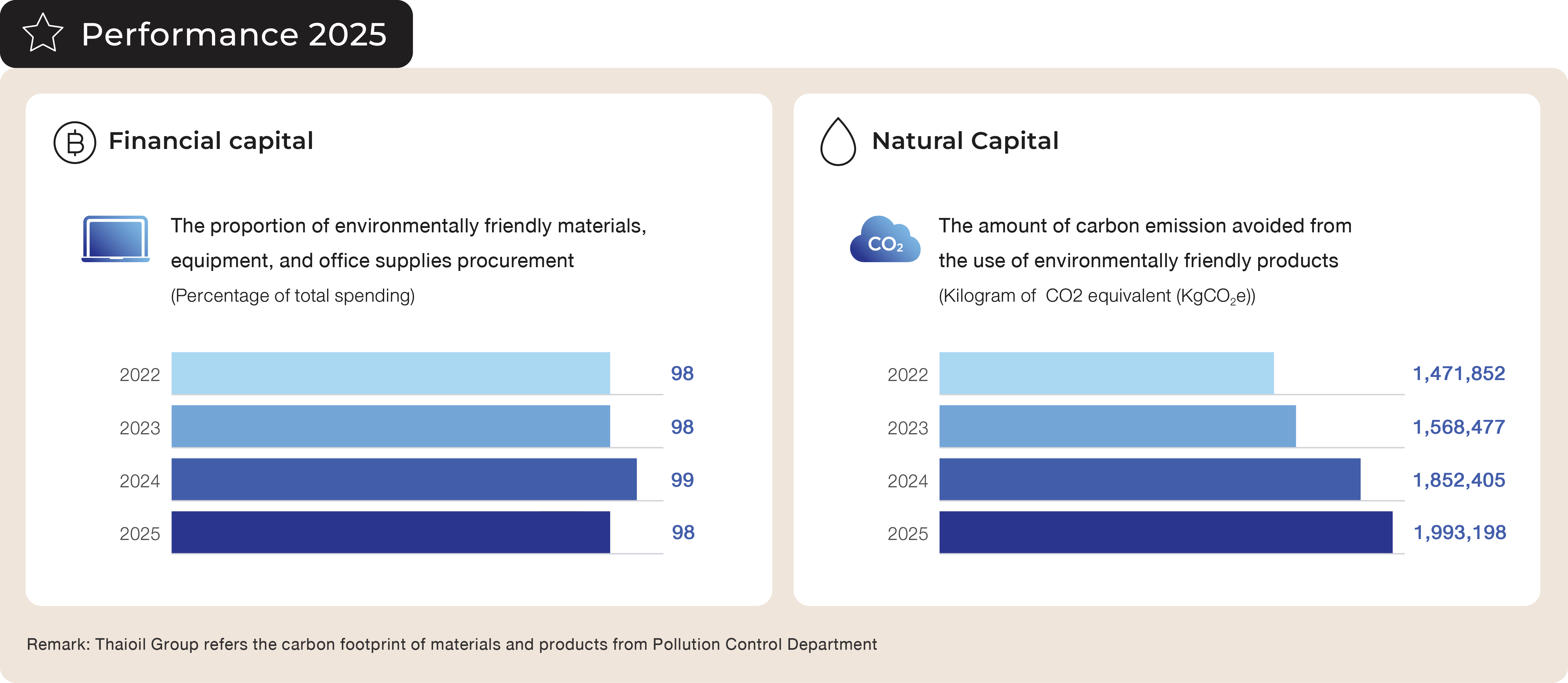
The Company prioritized the environmentally friendly products (Green Products) in the procurement of materials, equipment, and office supplies. This aims to motivate suppliers to develop their production processes for environmentally friendly products and reduce negative environmental impacts throughout the supply chain.
In 2025, Thaioil Group’s procurement of environmentally friendly products was 98%, which exceeds the target of 98% of total spending in this product category. In relation to this, Thaioil Group was able to avoid indirect greenhouse gas (Scope 3) of 1,993,198 Kilogram of carbon dioxide equivalents. Furthermore, The Company also prioritized other several products and services purchasing implementations that reduce the environmental impact. For instance, the procurement of environmentally friendly electrical control equipment, the use of vehicles certified with the Green Label, changing to use minibus EV for employee transportation, using eco-friendly cleaning products, using energy-efficient 5-star appliances, sourcing environmentally friendly electrical control equipment, and using LED explosion-proof light.
Opportunities
for Upcycling
To sustainably manage waste.
To carry out projects of waste upcycling for use in the organization’s activities.
To expand the Circular Economy project for communities and society.


Industrial Waste Management
Thaioil Group has made a commitment for an efficient resource management, seeking value optimization opportunities in waste recycling, and minimizing waste disposal in waste management. The Company aims to drive performance with the target of over 100% of waste management through the 3Rs (Reduce, Reuse and Recycle) in 2025, as well as maintaining the zero waste to landfill target that has been achieving since 2020. The circular economy and the 3Rs principles were applied throughout the production processes, from upstream to downstream. The Waste Management Committee drives and governs waste management towards the target.
Waste Management Programs
Waste audits to identify opportunities for improving waste performance.
Internal audits
Thaioil waste management committee is responsible for conducting waste audits, including internal (production process) and external (waste processor) audits, to ensure compliance with regulation and proper management of collecting, transporting, treatment, and disposal.
In 2025, Thaioil Group has implemented the waste internal audit plan for TOP Group Quality, Security, Safety, Occupational Health, Environment, Energy Management (QSHE) Management System, with 79 sections under TOP Group that were audited. The waste audit aims to assess the waste management system in alignment with Integrated Management System (IMS) including ISO9001, ISO14001, ISO50001, ISO45001, TIS18001 and ISO/IEC17025, ISO/IEC27001, TIS2677, ISO20000-1. The Waste Management Committee conducts the annual meeting between working group to set target to control and monitor waste generation. The communication of waste management manual, procedure for waste disposal valuable waste and spent catalyst is regularly conveyed to operators, engineers, and new staff. The waste management target deployment and waste reduction initiative are communicated in employee Town hall to enhance waste management system.
Thaioil Group has elevated the waste management in accordance with the sustainability development principle. The Company has 2022-2026 key target as below.
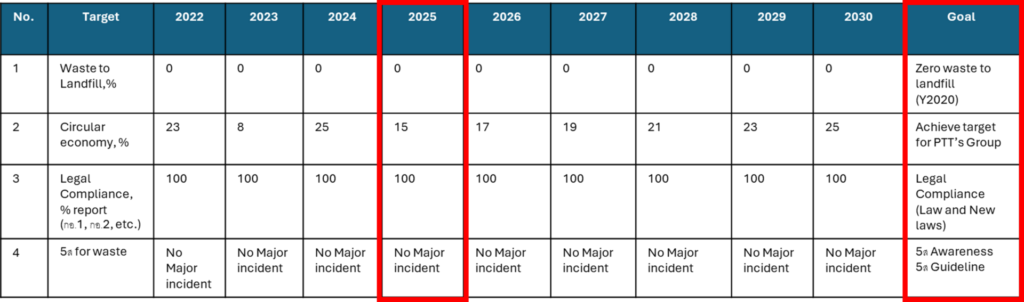
Additionally, Thaioil also conducts Vendor Waste Audit to evaluate suppliers’ waste management programs in alignment with the Integrated Management System, including certificates for ISO 9001, ISO 14001, OHSAS 18001, TIS 18001, manuals, procedures, work instructions, and community complaints.
External audits
Thaioil Group operates its business by adhering to the internationally recognized standard and receives regular certification for environmental management systems, ISO 14001. This adherence ensures that organizations take proactive measures to minimize their environmental footprint, comply with relevant legal requirements, and achieve their environmental objectives. The framework encompasses various aspects, including resource usage, waste management, monitoring environmental performance, and involving stakeholders in environmental commitments.
Investment in innovation or R&D to minimize waste
Thaioil Group has partnered with the National Center for Genetic Engineering and Biotechnology (BIOTEC) to explore the utilization of bio-sludge as a source of enzymes and lipase-producing microorganisms. The initiative aims to extract valuable enzymes or microorganisms from bio-sludge prior to disposal, thereby adding value to waste materials and reducing the volume of sludge requiring disposal.
Key Highlighted Projects
In 2025, Thaioil Group has implemented projects across three main areas as follows:
CE in Process (Circularity in Process)
The Company controls and manages waste from the production processes through an operational excellence to minimize waste generated. For the waste generated in Thaioil Group, the 3Rs method is applied to manage and maximize the value of the waste. Examples of the initiatives are listed below:
• Adding value to Spent Catalyst includes 229.99 tons of HDS-2/3 Spent Catalyst using for Molybdenum Reclaim, and 41 tons of Pacol Spent Catalyst using for Platinum Recovery. The reclaimed materials can be utilized in other industries rather than being disposed of or incinerated.
CE in Office (Circularity in Office)
Conducting research on recycle and reuse approach to increase value of office and food waste, for example:
• The Thaioil Group Zero Waste Project aims to raise awareness and provide knowledge for employees and contractors in waste separation and waste management.
• The Upcycling Plastic Waste Project involves transforming recycled plastic bottles into bags, umbrellas, and notebooks for distribution to employees and contractors. Employees are encouraged to participate in designing patterns for environmental conservation tailored to their local environments.

CE for Society (Circularity for Society)
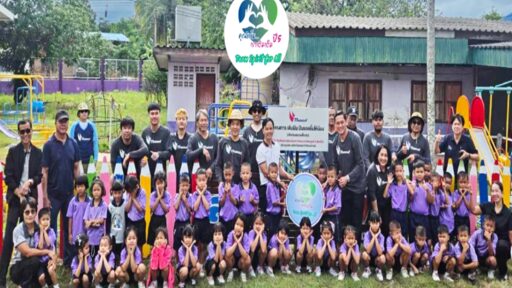
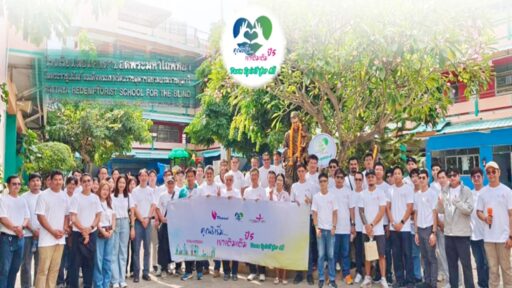
The Company adds value to the waste by turning it into community products through ongoing projects as follows:
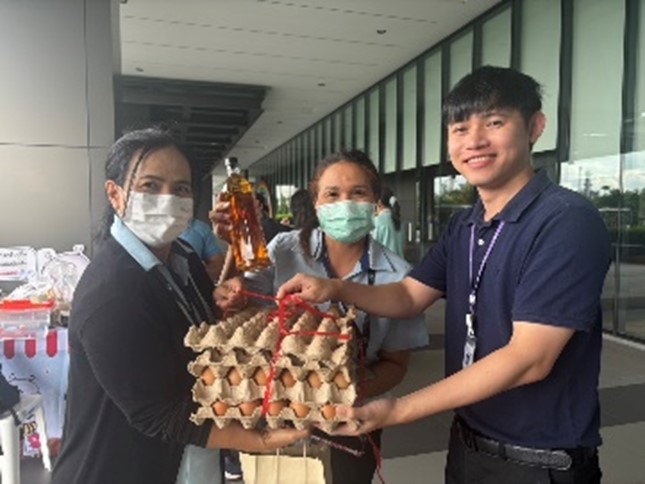
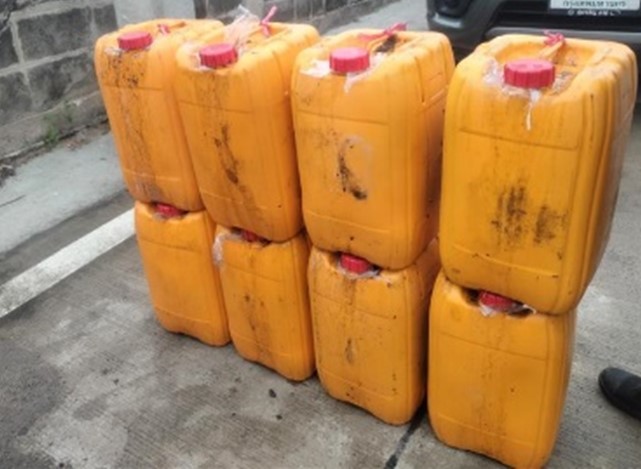
• The Company engages with the community through the “Exchanging Used Cooking Oil to Eggs” project, which aims to use the used cooking oil as a raw material for producing environmentally friendly biofuels. This project involves collaboration with the community, cooperatives, vendors, and Thaioil employees. In 2025, the project collected 493 kilograms of used cooking oil, helping reduce and prevent its dumping into drainage systems and minimizing water pollution and environmental impact.
2025
Performances
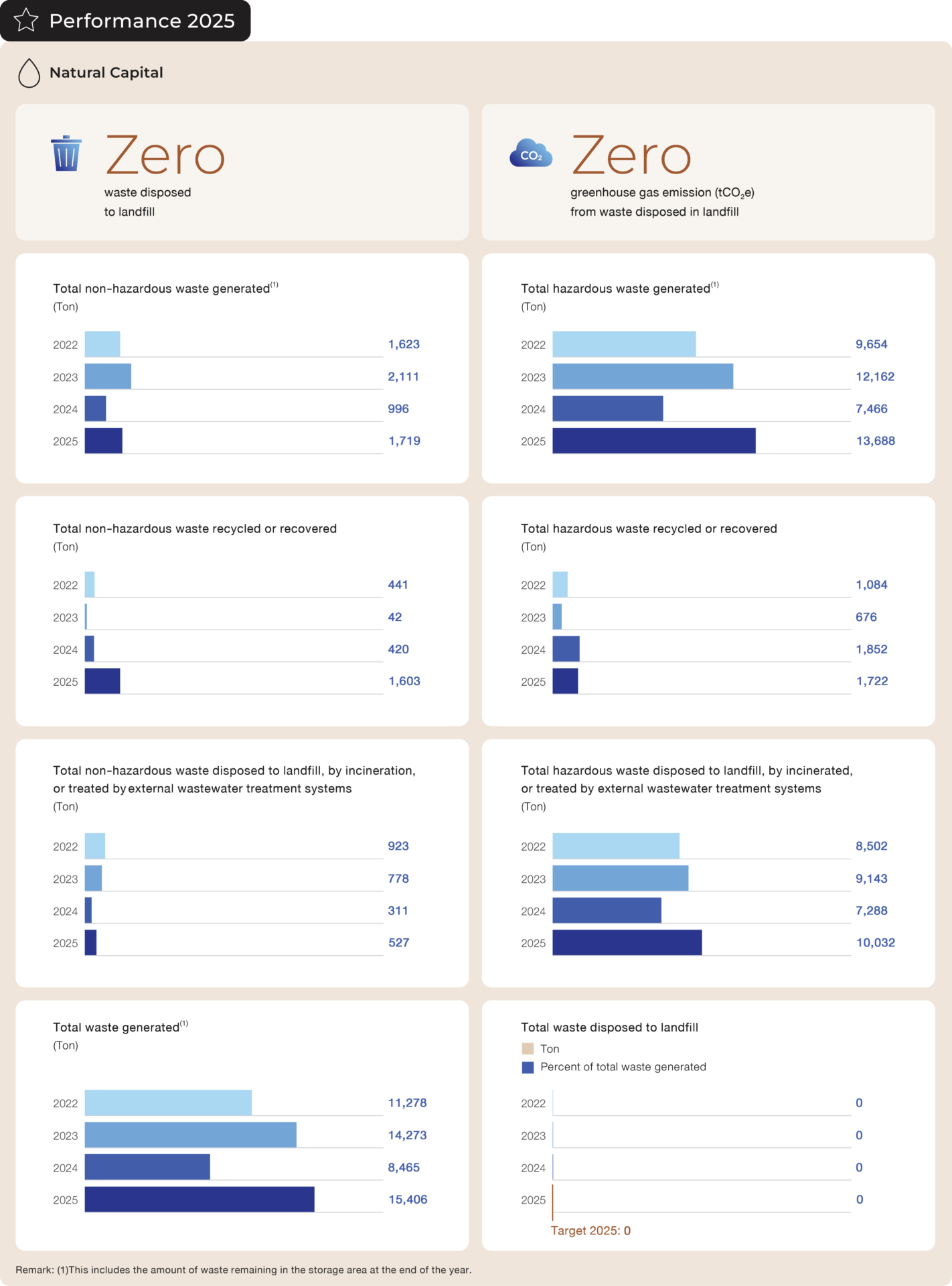
Remark:
(1) This includes the amount of waste remaining in the storage area at the end of the year.
Update : February 2025