Human Health and Safety
Human Health and Safety
Challenges, Risks,
and Impacts
Nowadays, the world is facing significant challenges across economic, social, and environmental dimensions. Thaioil Group has prioritizes occupational health and safety management as a significant issue in business operations. In the past, Thaioil Group has not only faced challenges in business operation arising from its core mission of operating refinery units for oil production, but also continuous capacity expansion through major projects such as the Clean Fuel Project (CFP), as well as major turnaround and maintenance activities across the Thaioil Group’s production units. These activities have posed a high risk of accidents and potential impacts on surrounding communities
Hence, the Company strengthens safety controls across all operational activities to ensure business continuity and prevent major incidents, thereby achieving safety excellence in business operations. Inadequate safety management may negatively impact the Company’s performance by increasing costs, fines, and penalties, as well as operational delays. It may also increase the risk of human rights violations affecting employees, contractors, and surrounding communities.


Thaioil Group has committed to establish the foundation of The QSHE policy (Thaioil and Subsidiaries’s Quality, Security, Safety, Occupational Health, Environment, and Energy Management Policy)
was established to prevent, control, and reduce impacts that may occur in normal and abnormal operations, and emergency situations for both current and future business expansion. The Company also supports and protects suppliers from operational risks by considering relevant rules, regulations, and requirements. The target is to establish the organization as a “No Harm, No Leak, Goal Zero” organization.
Targets

Maturity Level
Target 2025
Level 4
out of 5
Long-term Target 2030
Level 4.5
out of 5

Total recordable work-related injury rate (TRIR) for all workers
(employees and contractors)
Target 2025
Top 10%
of companies in oil and gas industry (by IOGP criteria)
Long-term Target 2030
0.10 cases
per million hours worked

Process Safety Event (PSE) Tier-1
Target 2025
0
incident
Long-term Target 2030
0
incident
Management Approach and Performance
Thaioil Group manages occupational health and safety through the establishment of the Quality, Security, Safety, Occupational Health, Environment, and Energy Management Policy (QSHE). The policy is used as a framework to drive and strengthen Thaioil Group’s towards continuous QSHE excellence and sustainably. The Company has integrated the management system covering 100% of all sites in Sriracha area. The management systems are as follows:
1. Occupational health and safety management system are certified with ISO 45001: 2018 standard since 2020 – Present
2. Management system for the competence of testing laboratories (ISO/IEC 17025: 2018)
3. Safety management system for chemical laboratories (TIS 2677: 2558)
4. Process safety management system
Thaioil Group Quality, Security, Safety, Occupational Health, Environment, and Energy Management Policy (QSHE Policy)


At present, Thaioil Group adheres to the Operational Excellence to Business Excellence (O2Bx) strategy, with the goal of becoming a world-class refinery, which is aligned with the capacity expansion plan of the Clean Fuel Project (CFP). Safety is considered one of the main pillars that must be developed and strengthened. The All SAFE White Green Principles were adopted to develop and raise operational safety awareness, culture, and leadership. Furthermore, safety performance is included as one of the corporate KPIs, reflecting the executive management’s commitment to prioritizing safety in operations. The definitions of All SAFE White Green are listed as follows:
All employees and contractors
S
Standards of works
A
Awareness on hazards
and risk assessments
F
Full compliance
E
Ensure
Drug Free
Environmental impact mitigation
Organization
Free from leaks
All | All employees and contractors |
|---|---|
S | Standards of works |
A | Awareness on hazards and risk assessments |
F | Full compliance on work standards with proper site supervision |
E | Ensure continuous improvement |
White | Drug Free |
Green | Environmental impact mitigation |
No Harm | Organization without injury |
No Leak | Free from leaks of hydrocarbons or hazardous chemicals from primary containment |
Thaioil Group has a specific function to control and implement the work plan. The Company has established the Safety, Occupational Health, and Working Environment Committee, in which more than 50% of the members are representatives of operational-level employees (excluding the committee chair). The committee requires at least one monthly meeting to share updates and monitor the progress of current performance and plans for future operations. In addition, Thaioil also maintains formal mechanisms for consultation and communication between management and employee representatives on occupational health and safety matters. Through Safety, Occupational Health and Working Environment Committee and regular safety meetings, management discusses workplace health and safety performance, incidents, corrective actions, risk mitigation measures, and employee concerns with worker representatives. These discussions support continuous improvement the Company’s commitment to providing a safe and healthy working environment for all employees.
Role of Safety, Occupational Health, and Working Environment Committee
• Review policies and plans related to occupational health and safety.
• Determine target related to the Safety, Occupational Health, and Working Environment.
• Develop a 5-year plan by prioritization and integration of the action plans with quantified targets to address those associated risks.
• Performance monitoring, evaluating, and reporting of progress in reducing/ preventing safety, health issues and associated risks related action items against targets.
• Report and provide recommendations to improve performance and maintain compliance with occupational health and safety regulations and standards in order to ensure the safety of all employees, subcontractors, and any other individual visiting onsite.
• Promote and support the organization of occupational health and safety-related activities.
• Conduct audits of occupational health and safety at operation areas and inspect statistics related to incidents in the area of operations at least once every month.
Occupational Health and Safety Initiatives and Programs
In 2025, the key performance of Thaioil Group on occupational health and safety are as follows:
Operational Excellence to Business Excellence (O2Bx) Strategy
- Adjusted the O2Bx strategy to become a world-class refinery and reviewed the corporate safety targets to align with the strategy – No Harm, No Leak, Goal Zero.
- Revisited the 5-year Occupational Health, Safety, Emergency and Crisis Management Plan to ensure alignment with internal and external environment, risks, new strategic plans, and new corporate targets.
- Assigned management executives to present case studies and significant safety issues from both internal and external sources at the monthly Board Meeting to continuously develop and improve the Company’s safety measures.
- Organized an on-site visit led by the CEO and President, and the management executives during normal operations, maintenance downtime, and construction period to motivate workers, demonstrate commitments to safe working conditions, and be a safety role model.
- Granted all employees and contractors the authority to stop or refuse work under unsafe conditions, as endorsed by the CEO and President. This initiative empowers workers to halt operations if they believe that the situation poses a danger or risk to themselves, their colleagues, the environment, or property. Additionally, proper risk control measures must be implemented before work resumes.
Occupational Health and Safety Risk Assessment
- Reviewed risk and hazard assessment identification process that may cause major incidents. The Company identified the control and preventive measures, with constant monitoring for effectiveness. This supports by safety inspections, performance analysis, and provision of the corrective and preventive actions to avoid recurrence for employees and contractors. The safety performance is reviewed monthly and monitored by management executives.
- Assessed high-severity risks and hazards assessment, and reviewed safety control and preventive measures. The proactive plans and measures on safety and security were established at different levels (defense in depth), covering all high-severity risks and hazards, especially chemical spills. The emergency drill of each emergency level was conducted and further developed towards the crisis management level together with external parties and local governments. This helps in the prevention and mitigation of business impacts, as well as the ability of Thaioil Group to always manage and maintain severe risks at acceptable levels.
- Reviewed major accident event profiles to align with the risks. The Company also reviewed and conducted a test on the emergency and crisis drills, and the emergency response plan according to the international best practices. Moreover, the Emergency Control Center was improved to be up-to-date, more efficient, and communicate to all relevant stakeholders.
- Reviewed accident and incident management practices to cover every type of incident, including work-related injuries, occupational illnesses, near-miss events, and other incidents including incidents in production processes. The Company also conducted severity and risk assessment through the Risk Assessment Matrix to select the appropriate investigating team and methods based on the severity and risk level of each incident. To avoid recurrence, the root cause and appropriate preventive measures were identified.
Safety Management Improvements
- Reviewed Permit to Work System, especially the work permits related to high-potential tasks causing severe accidents. All relevant checklists were also reviewed to ensure alignment with the international best practices. The Company also improves the work permit procedures and processes to ensure compliance, enhance safety control efficiency, reduce process time, and support sustainable growth through the integration of digital technology (real-time work status monitoring), worker participation, and international safety standards.
- Reviewed Permit to Work Inspection by the Area Operation Officers, Area Maintenance, and Safety Audit team to ensure that the practices are aligned with the requirements specified in the permits.
- In the 2025 safety maturity assessment, the Company was rated at 4.15 out of 5.00 points (the assessment is conducted every three years). Thaioil Group has prepared the Safety Culture Development Plan to build awareness for employees and contractors towards an accident-free organization.
- Conducted the evaluation of Health Performance Indicators based on the standards of International Association of Oil and Gas Producers (IOGP), which is the 2022 edition of international standard. In 2025, the Company scored 3.50 out of a total of 4.00 points. The Company commits to improve the development plan for management systems in line with criteria and requirements of the IOGP.
- Enhanced contractor safety management to align with the international best practices and conducted annual contractor safety performance evaluation by the Safety, Prevention, and Firefighter function. The evaluation covered safety management system and operational performance to evaluate the contractor. The contractor can be categorized by a color-coded criteria system, including green, yellow, and red, to be used as the criteria for deciding whether the Company should continue doing business with contractors or not. In the case that the contractors are categorized as low level (yellow and red), the Company will allow them to present corrective action plan to remedy the identified issues to comply with requirements within a specific timeframe.
- Reviewed safety practices for activities or tasks with accident risks, such as heavy lifting with crane, scaffolding, or electric device utilizing within the refinery area. The Company also conducted training and communicated to relevant employees and contractors to ensure compliance with the requirements.
- Reviewed Emergency and Crisis Management Manual and prepared the emergency response plan to cover environmental and community emergencies. This aims to prepare for the CFP project, which is scheduled for commissioning and start-up in the future.
- Reviewed Pre-Incident Plan at levels 1 and 2 to align with the current situations and international standards, and conducted drills as planned to prepare an effective response in emergency situations. In this year, the Company developed the pre-incident plan at level 2 to support the new production unit of the CFP project.
Safety Knowledge Sharing and Engagement
- Enhanced the knowledge, capabilities, and skills of employees and contractors through a safety training center to provide knowledge on safety theory and practice. In addition, the Company evaluated the capability of the employees and contractors, who performed safety-related tasks, and had a continuous Permit to Work System from the previous year. Meanwhile, the roles in the emergency and crisis management were also assessed through the Competency Assurance System.
- Provided training on the Permit to Work System and Clearance Certificate Signatory for those who are involved in performing duties in the work permit system.
- Organized ongoing work accident prevention and reduction programs to strongly emphasize and simulate employees and contractors to raise awareness on safety in the workplace. The goal is to achieve zero Medical Treatment Case (MTC).
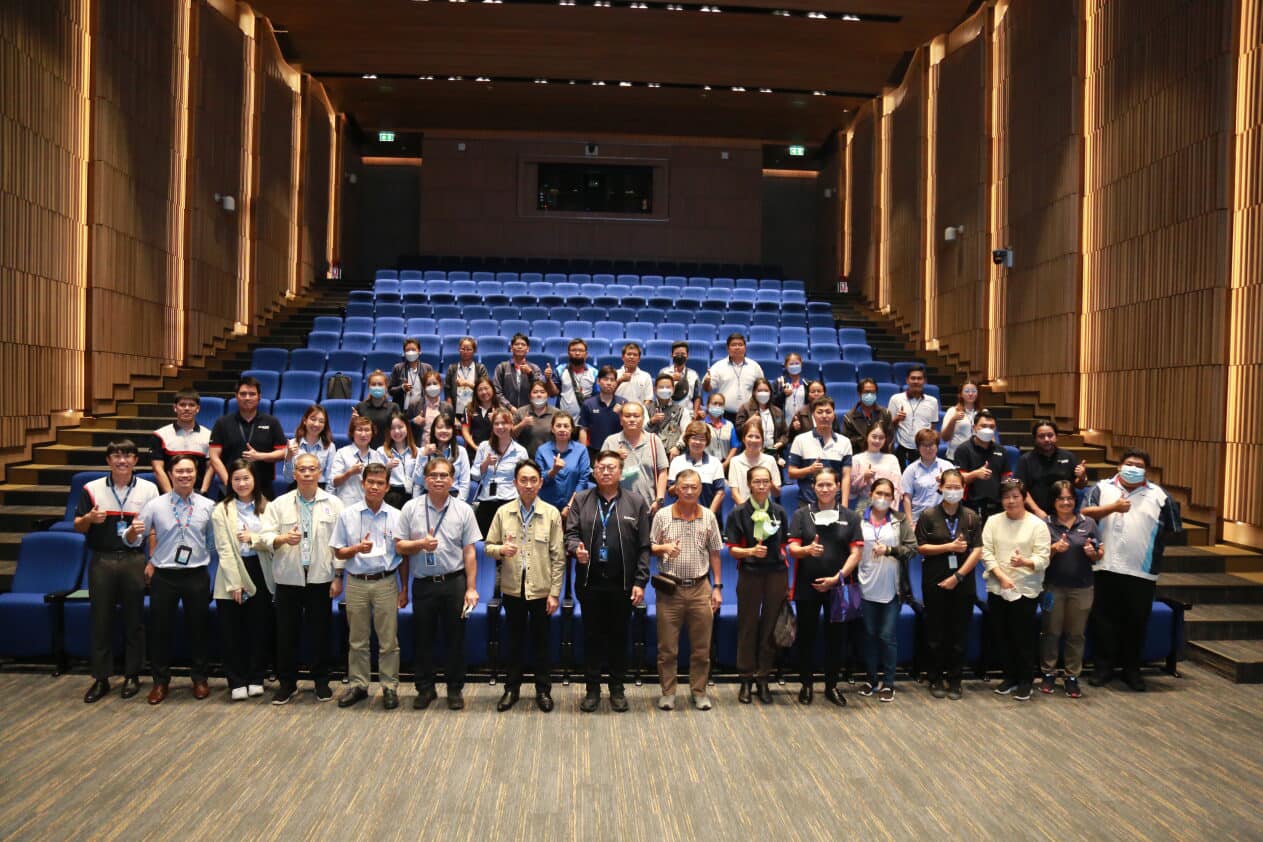
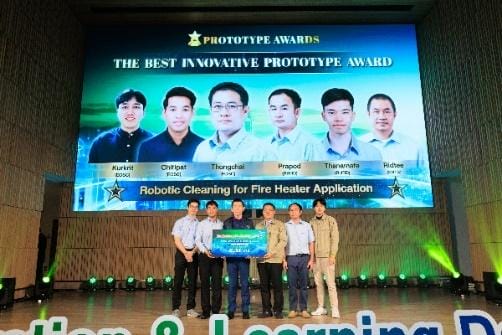
- Organized Thaioil Group QSHE Day 2025 to promote the safety culture for the employees and contractors by awarding and certifying those who have outstanding QSHE performance. The Company also organized exhibition booths to provide employees and contractors with safety knowledge and awareness.
- Raised awareness of potential hazards such as the line of fire and strictly ensure the compliance with the 13 life-saving rules. The Company also encouraged workers to write Potential Incident Report (PIR), emphasizing the significance of unsafe act and condition as specified in the pre-incident prevention measure.
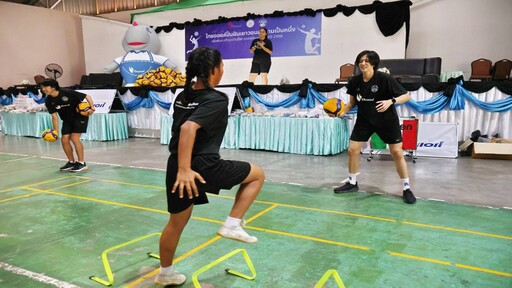
- Conducted training and knowledge sharing on safety, occupational health, and workplace environment for new employees and contractors. This aims to build awareness of basic risks and hazards in Thaioil Group’s operational areas, to recognize and understand the safety measures, and to mitigate risks in operations. The training courses include basic safety in refinery, basic firefighting, safety in confined space, and first aid.
- Conducted specific safety knowledge training for employees and contractors to improve operational effectiveness, ensure safety, and compliance with the requirements. For instance, Authorized Engineer (AE) / Authorized Gas Safety Inspector (AGSI) Course, Clearance Certificate Signatory course, Authorized Gas Tester course, and electricity safety course.
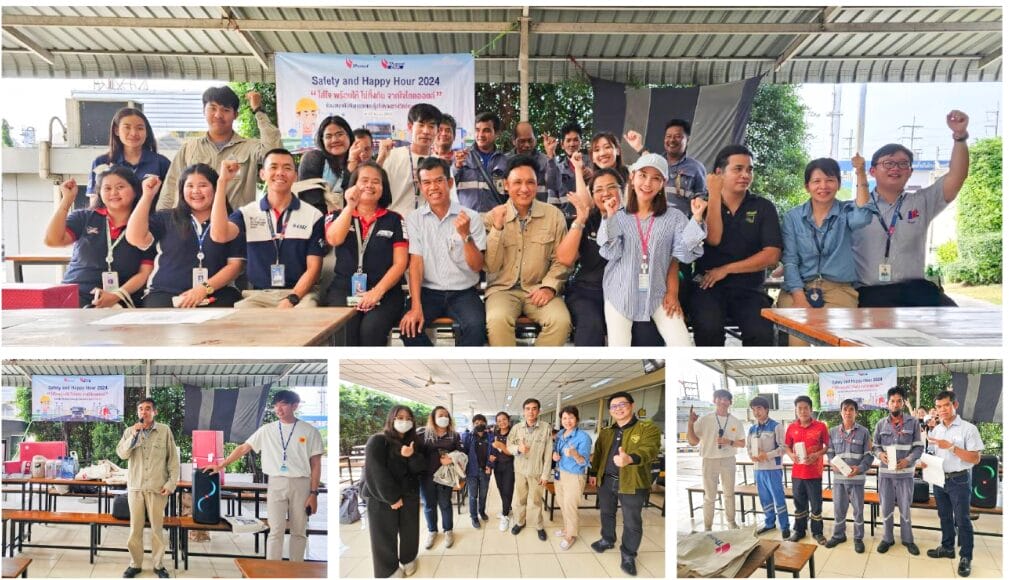
- Conducted a site visit to inspect key activities by making conversations with specific questions. This aims to create a mutual understanding and to recommend the safety practice in the activities that may pose risks on personal and process safety (GEMBA Walk & Talk). The QSHE Rollout activity has been consistently organized with a focus on providing more accessibility. In addition, the campaign to raise awareness about quality, security, safety, and the environment for workers in all operational areas has been expanded to include all operational areas and to encourage worker engagement. Moreover, Thaioil Group has applied appropriate management systems to achieve the sustainable development. The performance of such activities is regularly reported to and discussed with the management executives for resolutions. Likewise, the annual management review is performed to determine improvement areas and develop annual plans, along with the regular communication with the employees to ensure effective and impactful practices.
- Demonstrated its commitment to employee well-being by providing extensive health and safety training. A total of 270 employees received specific staff training in Health & Safety Standards. This included training in confined space operations, permit to work system, and first aid refresher courses. Additionally, 289 employees participated in general staff training that enhances workplace safety awareness, such as safety & security and basic firefighting courses. This promotes employees’ preparedness in handling emergencies and effectively reduces workplace risks.
Operational Excellence to Business Excellence (O2Bx) Strategy
Adjusted the O2Bx strategy to become a world-class refinery and reviewed the corporate safety targets to align with the new strategy – No Harm, No Leak, Goal Zero.
Occupational Health and Safety Risk Assessment
Reviewed the identification and assessment of risks and hazards assessment that may cause major incidents.
Safety Management Improvements
Reviewed Permit to Work System, especially the work permits related to heat and ignition (Hot Work).
Safety Knowledge Sharing and Engagement
Enhanced knowledge, capabilities, and skills of employees and contractors through a safety training center to provide knowledge on safety theory and practice.
The Responses to COVID-19 Pandemic Situation
Implemented the COVID-19 surveillance plan covering 3 phases. In Phase 0, or no infected cases, the prevention and surveillance measure will be emphasized.
2025
Performances
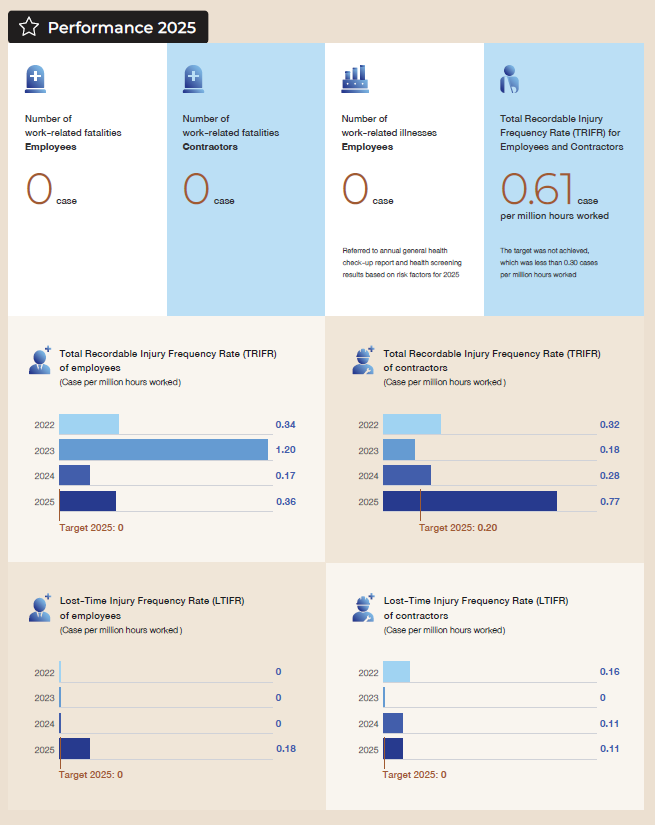
In 2023, while the Company was engaged in the Clean Fuel Project Constructions Phase, an accident occurred during the Post Weld Heat Treatment (PWHT) operation, resulting in severe injury to one of the contractors. The injured contractor received initial first aid at the accident site immediately by the Company’s occupational health physician team and was promptly transported to the nearest hospital for further medical treatment. Unfortunately, the contractor passed away later at the hospital. The Company took this accident seriously, halted the construction project temporarily, and appointed a committee comprising specialized experts to investigate the cause of the accident and implement preventive measures to avoid recurrence. Additionally, a systematic lesson learned sharing initiative was conducted for all relevant parties involved.
Process safety is one of the key components in the Safety Pillar identified in the strategic plans towards business excellence that requires continuous development and improvement. The main goal is to maintain business continuity without a Loss of Primary Containment (LOPC) or Process Safety Event (PSE) that could result in fatalities, asset loss, environmental impacts, and reputational damage. Thus, Process Safety Management (PSM) has become a key success factor that drives and strengthens the capability of the Company to achieve the No Harm, No Leak, Goal Zero target and deliver world-class process safety performance.
Since 2018, the Company has established the Technical Safety Function to develop and improve process safety management to meet the international standards of the Occupational Safety and Health Administration (OSHA). The proactive risk management is emphasized to prevent severe incidents. This allows Thaioil Group to conduct sustainable business and become a safe organization throughout the value chain.

Process Safety Initiatives and Programs
In 2025, Thaioil Group implemented process safety activities in accordance with international standards and best practices as follows:
- Reviewed the status of current process safety management against the OSHA standard and international best practices.
- Reviewed the 5-year process safety plan to develop and improve process safety management system in alignment with the international best practices.
- Reviewed and improved the process of Safety Critical Equipment (SCE) in the production process to increase its efficiency in management and align with the Thaioil Group’s operational context. This includes processes from identification and spare part management to handling situations where SCE equipment is not functioning normally.
- Conducted Management of Change (MOC) in the production process to be aligned with the international best practices. This helps preventing the incidents and reducing the impacts that may arise from changes or adjustments of production process. The Company reviewed other aspects such as risk analysis, prevention measures, and engineering design. Also, the technical reviews were conducted by specialists before the improvement. After the improvement, the mechanism will be tested before an actual operation. Furthermore, the Company determined both proactive and reactive MOC KPIs. The steering committee and operational committee were established to drive and support the Company to achieve the set targets.
- Provided the Technical Authority (TA) System in accordance with the international best practices to adopt in the MOC process. The purpose is to ensure that every change that occurs in the manufacturing process is systematically reviewed and approved by technical experts. Also, the functions related to such changes can work safely and sustainably.
- Enhanced the Management of Change (MOC) by providing training for individuals designated as Internal Auditor. Experts from external organizations serve as consultants to evaluate and certify those selected for the role. This ensures that all company changes are properly risk-reviewed, safely executed, and free from major accidents.
- Strengthened process safety awareness through 10 Process Safety Fundamentals and Process Safety Management and Barrier Thinking. Moreover, the management executives conducted a site visit or “GEMBA Walk & Talk” to inspect key activities by making conversations with specific questions. This focuses on providing recommendations and creating understanding of the activities that pose personal and process risks.
- Inspected process safety through designated inspection plans and checklists, reporting, monitoring and corrective actions, and systematic performance analysis.
- Complied with Process Safety Competency Development Matrix as the approach of the Community of Expert (COE), which covers key roles in process safety management. In addition, the Company conducted training and knowledge & capability assessment through determined criteria. This ensures that the employees are equipped with process safety knowledge, competency, and skills that are suitable for their assigned roles, leading to the excellence in sustainable process safety performance.
- Reviewed the Pre-Startup Safety Review (PSSR) process, including the safety protocol and PSSR checklist, to align with the international best practices and to build readiness for the Clean Fuel Project that will be commissioning and start up in the future.
- Encouraged the employees and contractors to learn from an incident and the international best practices. The acquired knowledge will then be reviewed and applied to improve the process safety and emergency incident management of the Company. This will prevent severe incidents and enhance organizational emergency and crisis management to reach international standards.
- Raised awareness and prevented hydrocarbon or hazardous chemical leakage from main containers, or Loss of Primary Containment (LOPC) Prevention. The Company reviewed and enhanced management process and LOPC chain to cover reporting, investigating, analysing, and Learning from Incident (LFI). Proactive management and prevention, such as Corrosion Under Insulation inspection, Flange assurance, and Gasket control, were also revisited. Moreover, the Company established the steering committee to drive and support the LOPC Prevention Project towards achieving the safety targets.
- Organized the Reliability Walkabout Campaign to raise awareness for workers in the operational areas. The campaign focused on finding the potential source or equipment that may have a leakage of inflammable or chemical substances in primary containment or production processes (LOPC).
- Conducted the Process Safety Knowledge Training Matrix for employees and contractors to ensure that all employees and workers who work in the operational areas of Thaioil Group have adequate knowledge and skills.
2025
Performances
Vel pretium dolor tellus id purus felis tellus cursus. Amet turpis vel enim aliquet maecenas. Egestas nulla urna suspendisse cursus aliquam mauris facilisis.
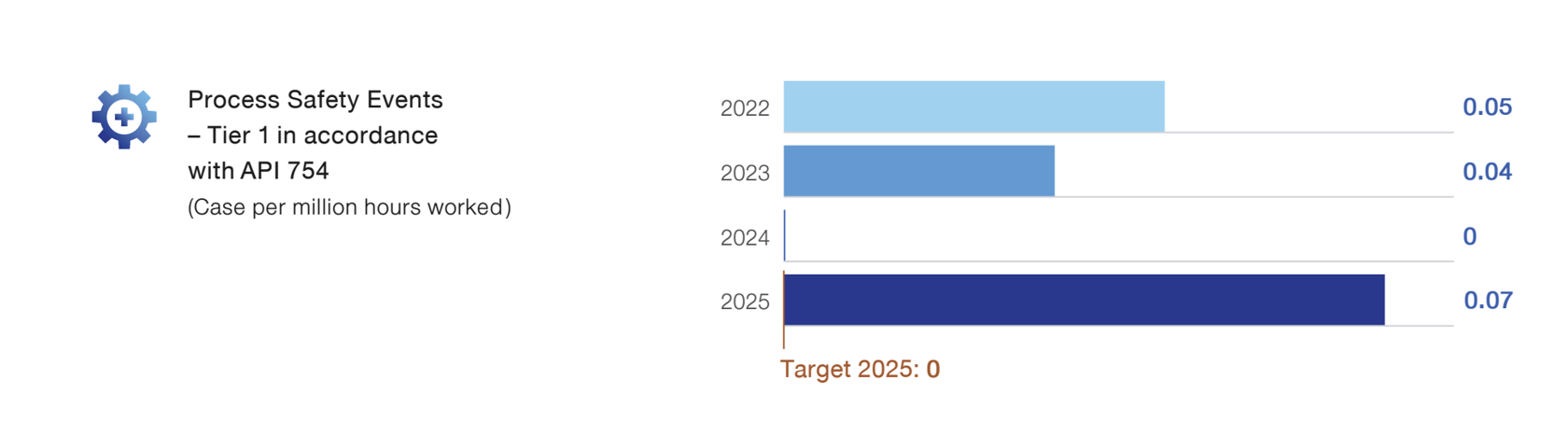
In 2023, there was one case of inflammable or chemical substance leakage from primary containment or production process, resulting in severe impact (Tier-1) in accordance with API 754. This incident accounted for 0.04 event per million hours worked, falling short of the 2023 target of zero event per million hours worked. Thaioil Group has investigated the root causes of the incident to resolve them and prevent future occurrences. The investigation results indicated that the detection system and responsible authorities could detect the event at its origin and quickly bring it under control. Consequently, the production process was not interrupted.